
Steve's Weekly Letter
Thursday, May 28, 2026


This was our view two nights ago when Priscilla and I watched the St. Louis Cardinals play the Milwaukee Brewers at American Family Field in Milwaukee—an hour north of our home. I attended my first Cardinals game at Busch Stadium in St. Louis on May 29, 1971. I was 9 years old, and the Cards won 8-7 against the Atlanta Braves. I saw future hall-of-famers Lou Brock, Bob Gibson, Joe Torre, Ted Simmons, and Hank Aaron. Fifty-five years later, I’m still following the Cards. This game was forgettable, though, as the Cards lost 6-0!
Reflection
The Bible constantly reminds us of our future hope—even in the darkest moments of biblical history.
One example is the account of what happened after the death and burial of the great prophet Elisha.
The Chariots and Horsemen of Israel
Before we look at the aftermath of Elisha’s death and burial, we need to understand how devastating his death was to the nation. 2 Kings 13:14 says: Now Elisha had been suffering from the illness from which he died. Jehoash king of Israel went down to see him and wept over him. “My father! My father!” he cried. “The chariots and horsemen of Israel!”
The king’s response is striking. It seems odd that Israel’s king, Jehoash, would grieve over Elisha’s expected death when the text is clear that Jehoash did evil in the eyes of the LORD and did not turn from idolatry (13:12). In fact, at least one previous Israelite king tried to kill Elisha (see 2 Kings 6:31-32). So Jehoash’s reaction seems odd.
Yet it makes sense when we listen to what he said. His grief did not spring from love and affection for Elisha. Rather, Jehoash believed that the elderly prophet was the key to defeating the enemies that were attacking him (and he was right!).
The cry of Jehoash, “The chariots and horsemen of Israel!”, has puzzled Bible scholars. The best solution, in my opinion, is to understand it as a reference to Elisha—just as Elisha applied it to Elijah in 2 Kings 2:12. This is like the time when Chicago Bears’ fans referred to William Perry as “The Refrigerator” due to his large size. Referring to Elisha as “the chariots and horsemen of Israel” signifies that he is Israel’s true strength in battle. This is only true, of course, because of what the name Elisha means: “My God is salvation.”
No wonder, then, that the prospect of Elisha’s death was devastating for Israel’s king.
Hope in Resurrection Life
Yet something incredible happened after Elisha died. Here is the account in 2 Kings 13:20-21: Elisha died and was buried. Now Moabite raiders used to enter the country every spring. Once while some Israelites were burying a man, suddenly they saw a band of raiders; so they threw the man’s body into Elisha’s tomb. When the body touched Elisha’s bones, the man came to life and stood up on his feet.
This account is mind-blowing! Of course, I’m stunned by what happened. But the way the writer reports it is shocking too. This event deserves a long chapter. Yet it gets reported in a brief, terse style. There is no report of how people responded or what the man did after he came to life. Instead, the writer quickly moves on. It’s like God wants to remind us of a reason to hope, even if this is not the time to elaborate on it.
The man who was thrown into Elisha’s grave is a symbol—a real life parable—of God’s people being being thrown out of his sight into exile (see 2 Kings 17:20, which uses the same word for “threw” as in 2 Kings 13:21).
Yet the unexpected resurrection of the dead man is a symbol of God raising his people to new life—ultimately at a resurrection at the end of time (see Daniel 12:1-2).
This account makes an important point: Our hope in the worst of times is in God’s power to raise his people to new life!
The Basis of our Hope
But what is the basis of our hope that God will raise his people to new life? The writer provides the answer immediately following the account of the man thrown into Elisha’s tomb. 2 Kings 13:22-23 says:
Hazael king of Aram oppressed Israel throughout the reign of Jehoahaz. But the LORD was gracious to them and had compassion and showed concern for them because of his covenant with Abraham, Isaac and Jacob. To this day he has been unwilling to destroy them or banish them from his presence.
For a moment, the writer provides a flashback to Jehoahaz—the father of Jehoash. Like his son, King Jehoahaz also did evil in the eyes of Yahweh (see 2 Kings 13:1-2). Yet 2 Kings 13:22 tells us why Yahweh was gracious to Israel throughout the reign of Jehoahaz and even in the face of Aramean oppression: because of his covenant with Abraham, Isaac, and Jacob.
This is the only reference in 1 and 2 Kings to God’s covenant with Abraham and his offspring (see Genesis 12:1-3; 15:1-20; 17:1-27). Yet it comes at a strategic time, reminding us that our hope is based on God’s promise to build a great nation through Abraham—a nation through which God would bring blessing to all people.
Hope in Dark Times
So then, our hope in the worst times is in God’s power to raise his people to a new life.
This continues to be true throughout 2 Kings—even in the devastating ending. In 2 Kings 25:1-7, the Babylonian king captured the city of Jerusalem. Then he put out the eyes of King Zedekiah after Zedekiah watched the execution of his sons. Yet at the end of the chapter, a previous king of Judah, Jehoiachin is released from prison in Babylon and given a seat of honor (25:27-30).
Here, then, is another glimmer of hope and a reminder that the story is not over.
Eventually, King Jesus is put to death in the city of Jerusalem. Yet he was raised to life three days later, and his resurrection is the “first fruits” guaranteeing our future resurrection from death (1 Corinthians 15:20-23).
Jesus’ resurrection is a key part of the fulfillment of God’s promise to Abraham—to establish a great nation through which God would bring blessing to the earth.
Never forget that we have hope in the darkest times because of God’s power to raise us, his people, to a new life.
Personal Update
This Sunday, May 31, I plan to preach Ephesians 3:1-13 at the Evangelical Free Church of Des Plaines, where I serve as interim pastor. The title of the sermon is “Encouragement for Those who Suffer for the Gospel.”
If you know of anyone who is interested in learning how to preach Old Testament Narrative literature, here is the link to videos I recorded last week for Biblical eLearning, a ministry of Dr. Ted Hildebrandt.
The book I’m reading this week is Becoming God’s Family: Why the Church Still Matters by Carmen Joy Imes. You can view it here. This is the third book in a trilogy. The first two books are Bearing God’s Name: Why Sinai Still Matters (here) and Being God’s Image: Why Creation Still Matters (here).
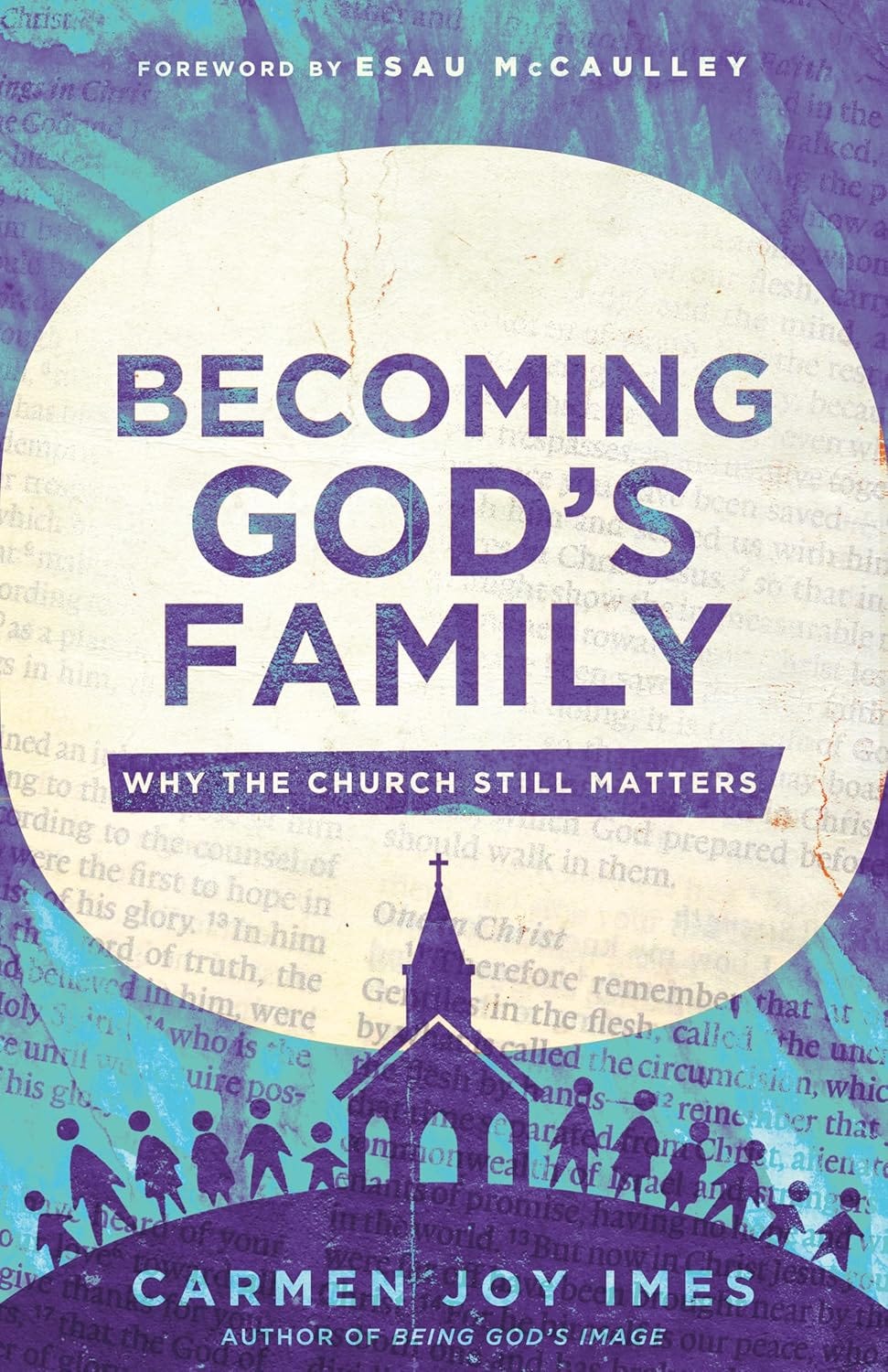
Becoming God’s Family provides an outstanding survey of how God has been present with his people—the gathered community of faith—across the entire Bible. Carmen is an outstanding Old Testament scholar who loves the church and urges believers not to give up on it. Even though the church is not perfect, God does not intend for us to walk the life of faith alone. We need Christ’s church!
Grandkids Corner
Finally, Priscilla and I attended the spring concert last week at Peoria Christian School where our granddaughter, Taryn (almost 9), just finished third grade. She was part of a small select group of students to play “Amazing Grace” and “Ode to Joy” on recorders. Below is a photo of Taryn playing her recorder in the concert.
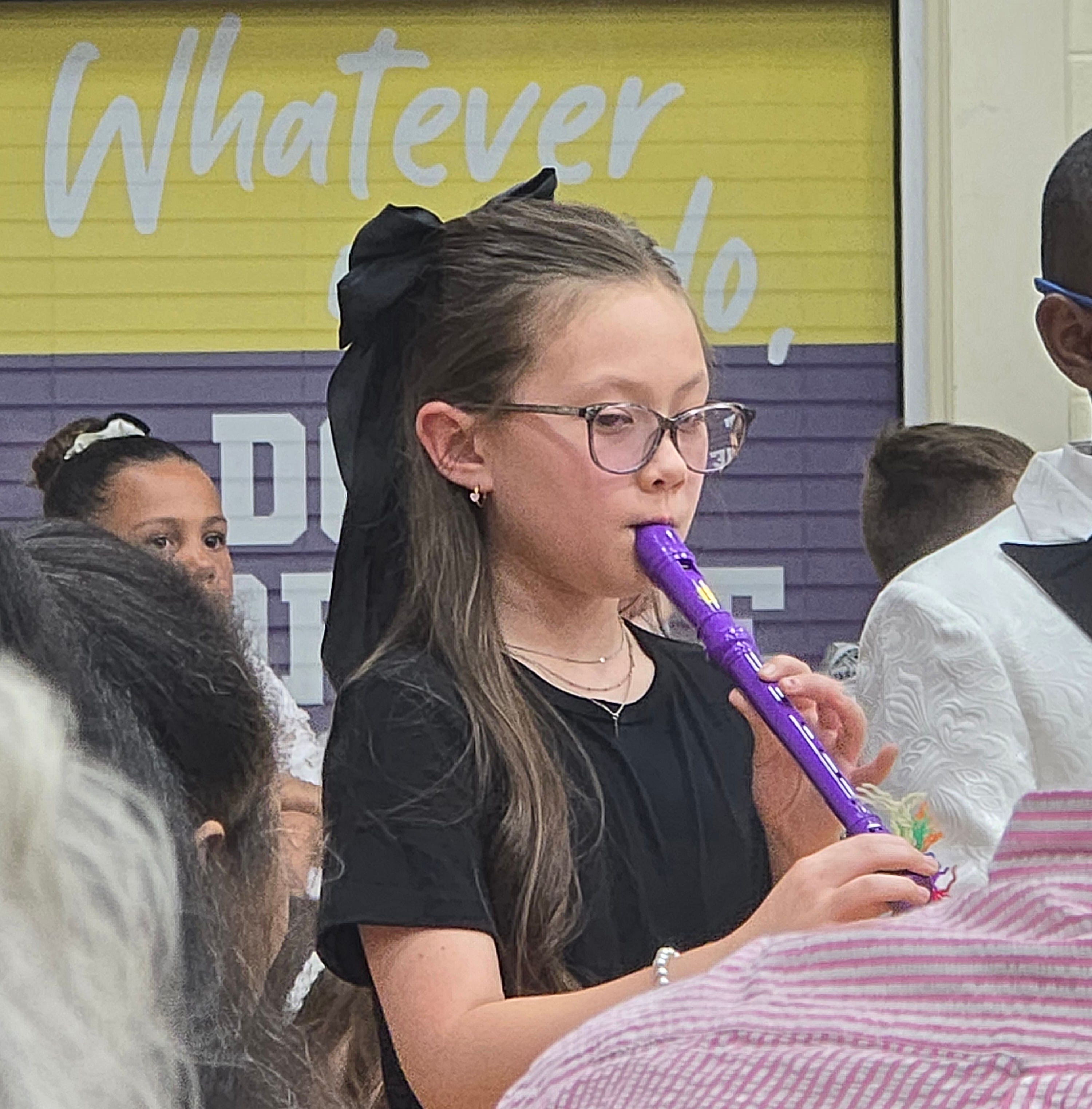
Taryn and the other students did a great job—really! I have heard grade school students playing recorders in such a manner that school officials should have warned those with heart conditions to leave the room. But these students were skilled.
Afterwards, Taryn rode in our vehicle on the way to lunch. We lavished praise on her for the great job we did, and she rewarded us. She just happened to have her recorder with her, so she played it for us all the way to our restaurant. Our recorder-concert-in-the-car included “Hot Cross Buns,” “When the Saints Go Marching In,” “Mary Had a Little Lamb,” “The Imperial March” from Star Wars (which she learned for her dad), as well a repeat of “Amazing Grace” and “Ode to Joy.”
A little recorder music goes a long way, but the drive was a pleasant experience since she is a good musician.
Thanks as always for reading my weekly letter. Have a good weekend!