
Steve's Weekly Letter
Thursday, February 26, 2026

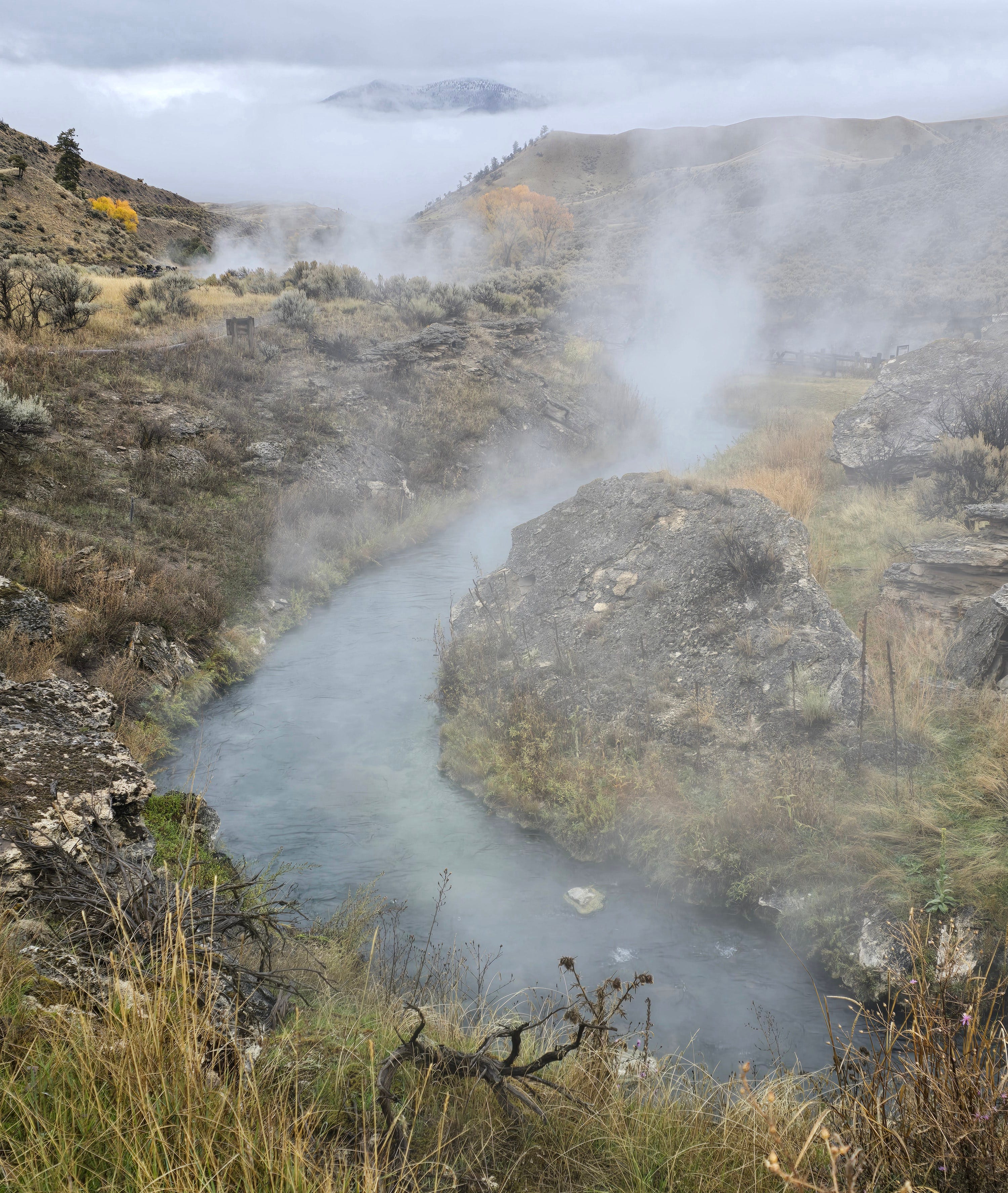
I took this photo of the “Boiling River” in Yellowstone National Park on an October day while fly-fishing the Gardner River. This thermal “river” empties into the Gardner River. The mist and clouds kind of remind me of late February days in northern Illinois where I live!
Reflection
A few times in my life, when I have faced difficulties, well-meaning believers have said: “Remember, Steve, God will not give you more than you can handle.”
I appreciate their concern and care, but I no longer believe this is true.
It’s not because I have lost confidence in God. It’s just the opposite. The more I study Scripture, the more I am convinced that God will sometimes give us more than we can handle—and that he has a purpose for doing so. One of the passages that convinces me that God sometimes gives us more than we can handle is 1 Samuel 30.
Escape from the Amalekites
When we meet David in 1 Samuel 30, he is on his way back to Ziklag—where his family was living—with his motley crew of warriors.
God had just delivered him in chapter 29 from a difficult, compromising situation--one of David’s own making. When it looked like he was going to be destroyed by King Saul, David tried to handle it on his own. Instead of inquiring of God, like he had done previously (23:1-4), David leaned on his own understanding of the situation (27:1-4) and took refuge with his bitter enemies—the Philistines.
David pretended to be on their side, fighting against his people, the Israelites. What he was actually doing, though, was fighting against Israel’s enemies.
But the day came when Achish, one of the Philistine leaders, wanted David and his men to accompany him into battle as his bodyguards. The problem was, the battle was going to be against Israel. How is David going to get out of this one?
As it turns out, the other Philistine leaders didn’t think it was a good idea and forced Achish to leave David and his men behind—to send them back to Ziklag.
This was God in his grace at work through the ordinary circumstances of life to remove David and his men from a potentially explosive situation—politically as well as physically. What David does not know—but we know from chapter 28—is that Saul is going to die in this battle. Even if David intends to switch sides during the battle, there will be people who believe that he had something to do with Saul’s death.
Providentially, David gets sent home.
From Escape to Disaster
But when David and his men arrived home, they discovered that all was not well. David returned home to “more than he could handle.” 1 Samuel 30:1-3 says: David and his men reached Ziklag on the third day. Now the Amalekites had raided the Negev and Ziklag. They had attacked Ziklag and burned it, and had taken captive the women and everyone else in it, both young and old. They killed none of them, but carried them off as they went on their way. When David and his men reached Ziklag, they found it destroyed by fire and their wives and sons and daughters taken captive.
When David and his men made this discovery, they were devastated. 1 Samuel 30:4-5 says: So David and his men wept aloud until they had no strength left to weep. David’s two wives had been captured-- Ahinoam of Jezreel and Abigail, the widow of Nabal of Carmel.
But it gets worse.
1 Samuel 30:6 reports: David was greatly distressed because the men were talking of stoning him; each one was bitter in spirit because of his sons and daughters.
The verb “distressed” is a vivid word in Hebrew. It has to do with being in a narrow or constricted space—that is, a tight spot. If that’s not vivid enough, the writer adds the adverb “greatly.” This is a situation David simply cannot handle!
David’s Response
How, then, did David respond to a situation he could not handle? He turned to the One who could handle it. The end of 1 Samuel 30:6 says: But David found strength in the LORD his God. Actually, the Hebrew is more vivid than that. The verb form is “reflexive,” so that this sentence reads: But David strengthened himself in the LORD his God.
Alright, so how did David strengthen himself in the LORD? The text doesn’t tell us, but it doesn’t need to. We know from the psalms David wrote that he turned to the Word and to prayer (see Psalm 25:1-5, 16-22).
Today, when we face situations we cannot handle, we strengthen ourselves in the LORD in the same way David did—through Scripture and prayer. We find guidance in God’s Word, and we express our dependence on him in prayer.
As the narrative continues, we see that David is back to inquiring of God rather than leaning on His own understanding (1 Samuel 30:7-8).
How God helped David
Then, in 1 Samuel 30:9-20, we find that God provides unexpected help from an abandoned member of the raiding party—an Egyptian, the slave of an Amalekite. This man led them to the the raiding party. So, David and his men overtook the Amalekites, rescued their families, and even took plunder.
What was true for David is true for us today: God sometimes gives us more than we can handle to teach us to depend on Him.
If you need more biblical proof, read 2 Corinthians 1:8-11. The Apostle Paul talks about a time in his ministry when he and his co-workers were under great pressure, far beyond our ability to endure, so that we despaired of life itself (verse 8) Don’t tell Paul that God never gives us more than we can handle! Paul saw a purpose in this situation he was unable to handle himself. But this happened that we might not rely on ourselves but on God, who raises the dead (verse 9).
Alright, is there anything more to observe in 1 Samuel 30? Yes. The story does not conclude in verse 20. There is a wonderful consequence of learning to depend on God rather than on our own understanding. We’ll discover this next week as we explore the remainder of the narrative in 1 Samuel 30:21-31.
Personal Update
This Sunday, March 1, I plan to preach Ecclesiastes 5:8-6:12 at the Evangelical Free Church of Des Plaines, where I serve as interim pastor. The title of the sermon is “The Downside of Wealth and What to Do about It.”
Today I am Tulsa, Oklahoma where I’m teaching today and tomorrow for Western Seminary. These will be the final two class sessions in a course on “Theology and Practice of Team Leadership.”
The book I’m reading this week is related to the this course. It’s Wisdom in Leadership by Craig Hamilton. You can check it out here. But for a reasonable price for the paperback edition, order it here. A pastor-friend, Tim Higgins, recommended it to me three years ago, and I’ve been pulling it off the shelf ever since then.
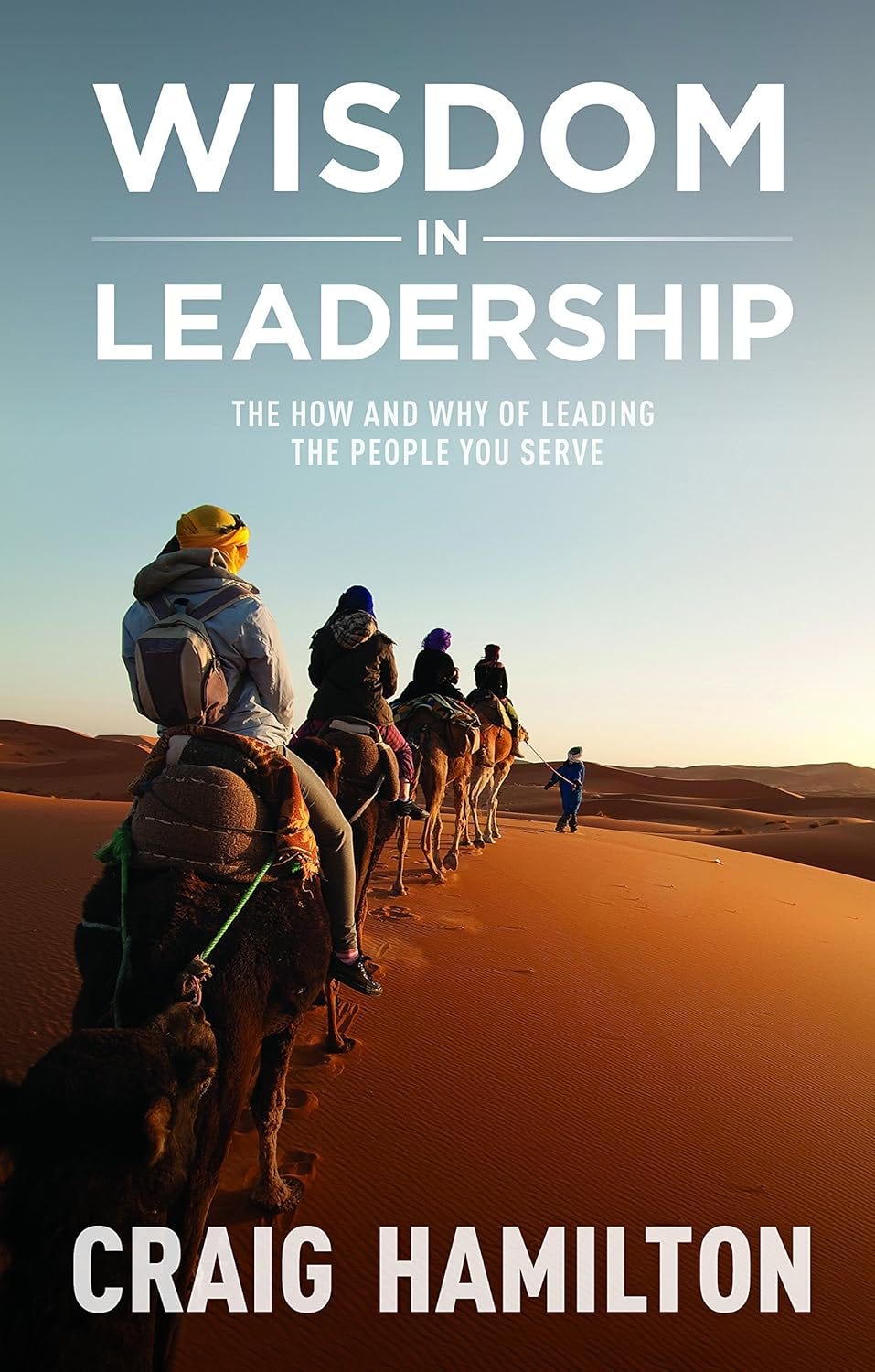
The book has 78 short chapters that you can read in any order on a variety of leadership topics. Frankly, this is one of the most useful leadership books I’ve ever read. If you have time to read only one book on leadership, I recommend this one.
Hamilton is an Anglican minister in Australia, and he is quite conservative theologically (hence the endorsement by Kevin DeYoung of The Gospel Coalition). Yet he has also learned from a variety of “leadership mentors” from church leaders like Andy Stanley, and Lyle Schaller to marketplace leaders like Patrick Lencioni, Jim Collins, and Marcus Buckingham.
Grandkids Corner
Last week our family loyalties were tested at a grade school girls basketball team. Well, sort of. Our granddaughter, Gabriella (11), is a 5th grader at Adler Park Grade School here in Libertyville. Her team, the Adler Gators, played their crosstown rivals from Copeland Grade School—the Copeland Cougars. The coach of the Cougars happens to be our son-in-law, Grant. He is Gabriella’s uncle. The two are pictured below during the game.
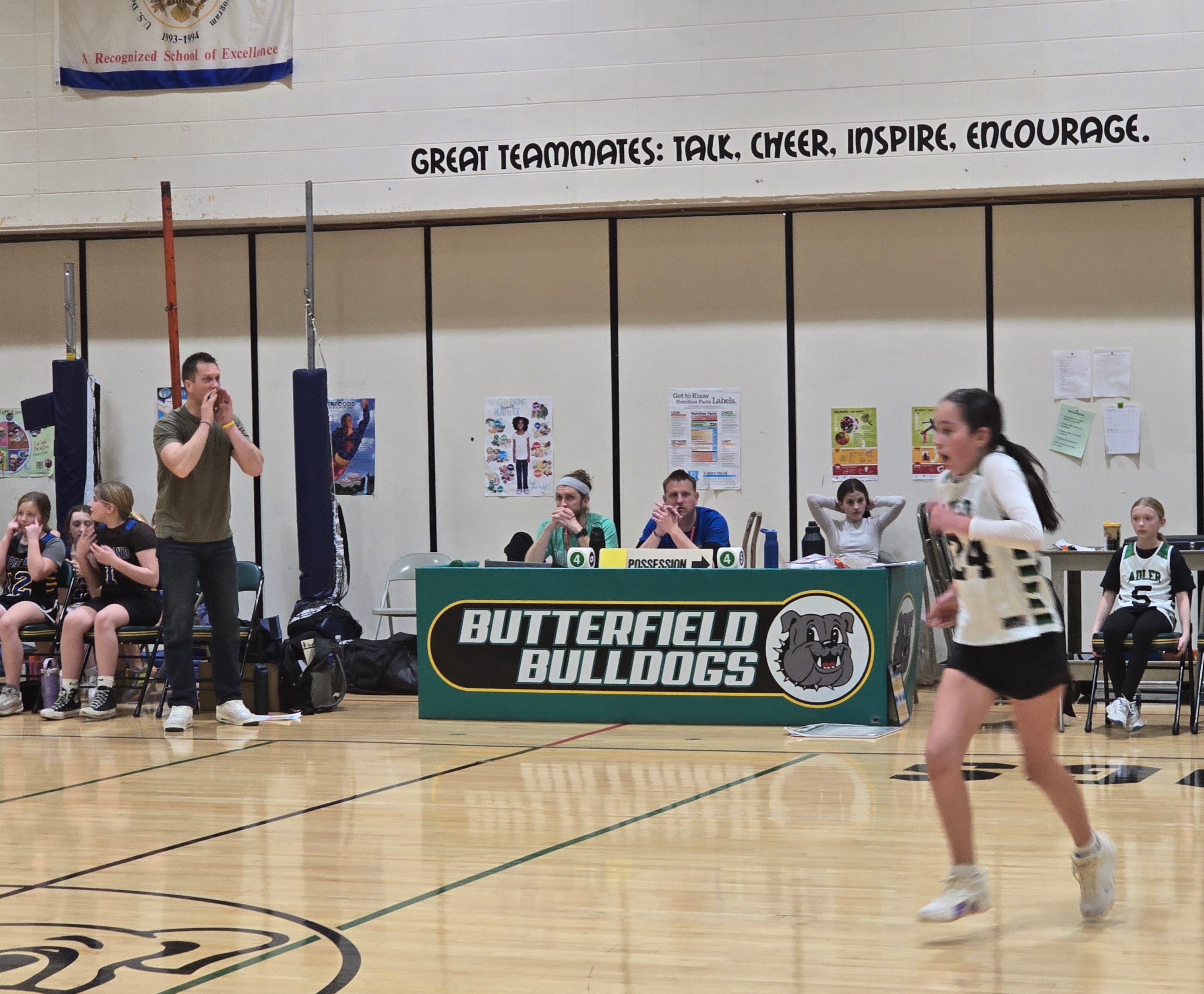
Gabs (as we call her) led her team to a 14-10 victory. Remember, these are 5th grade girls, and a few of them have not played much basketball—thus the low score. Gabs had 8 points and several rebounds and steals. It’s not quite right to say that she outdid her Uncle Grant, though, because he coaches another 5th grade girls team that has the best players from all four grade schools in Libertyville—and Gabs is on his team. Grant has worked with her and helped her with her game.
There was no rest for Gabs, though, once her game was done. She quickly changed into her cheerleading uniform for the 5th grade boys game!
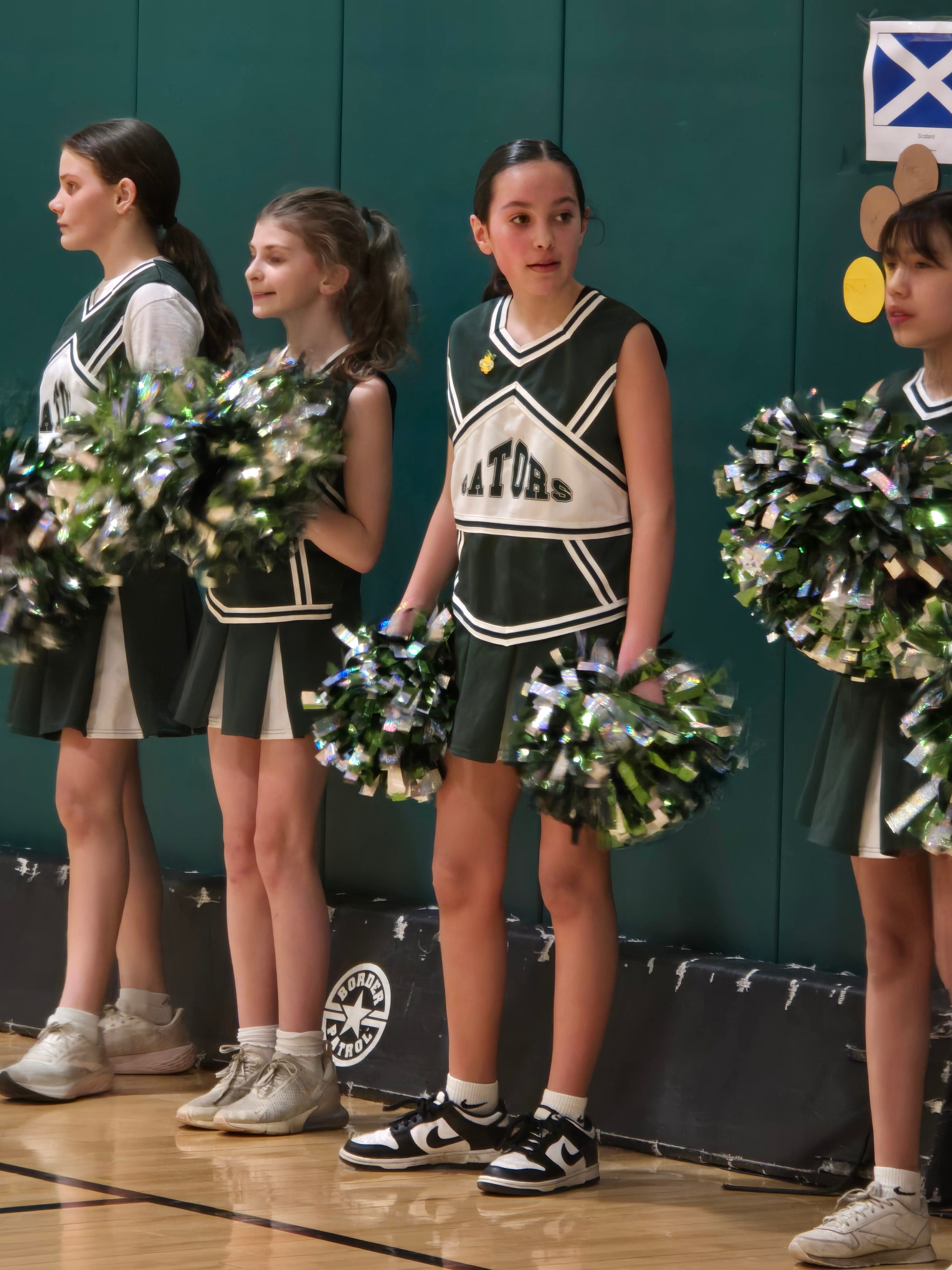
It was a long fun evening for her—and for all the family members seated on the wood bleachers. And if you’ve been following these “Grandkids Corners,” you might be interested to know that our four-year old twin grandkids (Gabriella’s younger siblings) did go to the concession stand.
Thanks as always for reading my weekly letter. Have a good weekend!