
Steve's Weekly Letter
Thursday, July 2, 2026

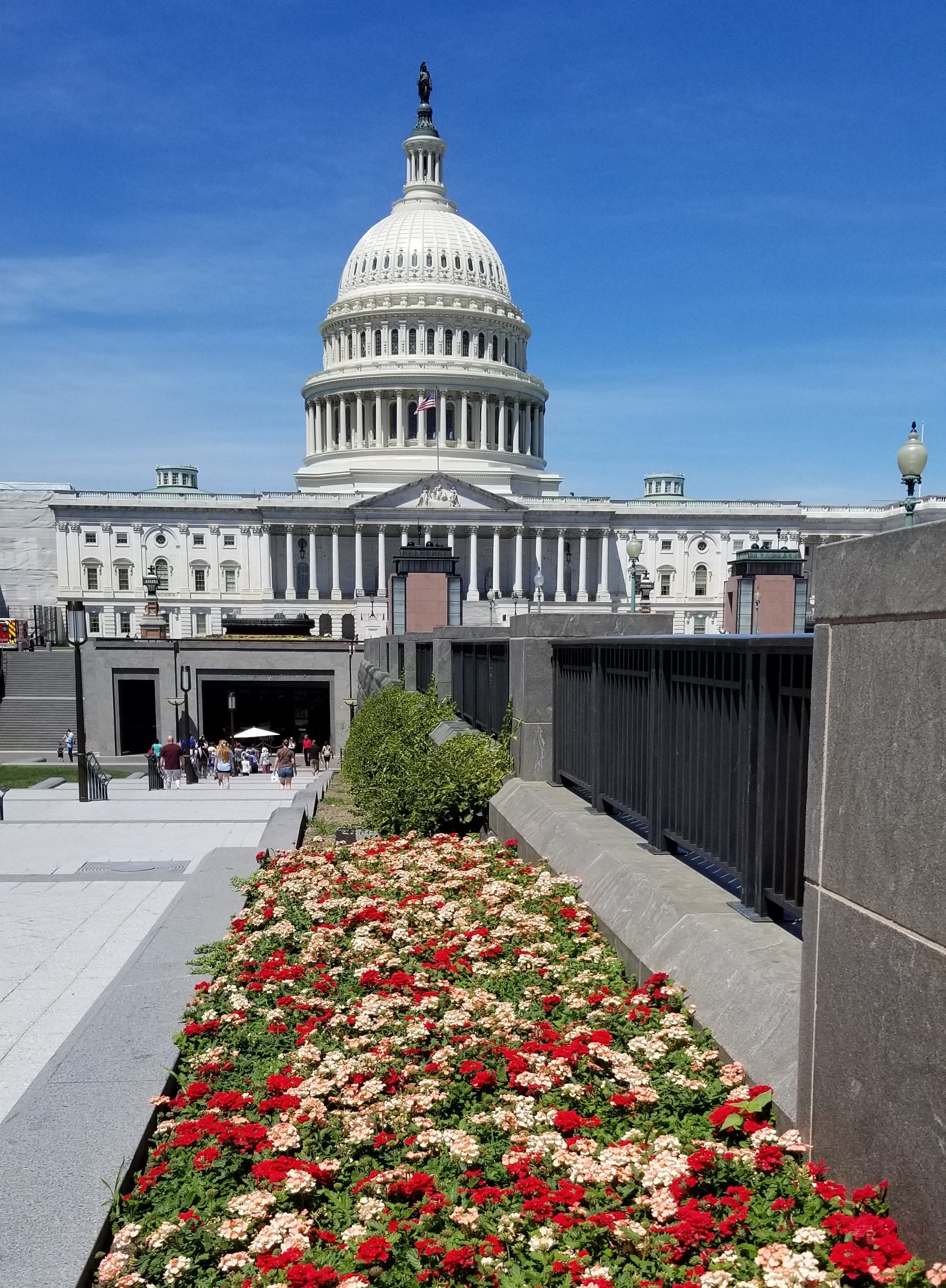
This photo of the United States Capitol in Washington D. C. (which I took on July 1, 2019) features red (flower bed), white (capitol building) and blue (sky)—an appropriate color scheme as we prepare to celebrate our nation’s 250th birthday in two days.
Reflection
Is it alright for a follower of Jesus to celebrate Independence Day?
To state the question another way, is it alright to be patriotic and fly an American flag on our nation’s 250th birthday (in two days), or is this at odds with our faith in Jesus?
Personally, I believe it’s fine to celebrate Independence Day and display a patriotic spirit as long as it’s done properly. The issue, I am convinced, is not if we should celebrate it, but how we should do so.
Christian Patriotism vs. Christian Nationalism
I suggest we celebrate Independence Day as Christian patriots, not as Christian nationalists. A Christian patriot is someone who loves the country in which God has placed them. It’s true that we are citizens of heaven (Philippians 3:20). Yet we can take our cue from God’s instructions to the exiles in Babylon a few hundred years before Jesus. He told them to seek the peace and prosperity of the city to which I have carried you into exile. Pray to the LORD for it, because if it prospers, you too will prosper (Jeremiah 29:7).
On the other hand, Christian nationalists believe the USA has a special relationship with God and needs to be “reclaimed for Jesus Christ.” It views the USA as a “city on a hill” that God has raised up to bring glory to himself (Matthew 5:14). Christian nationalism also gives the impression that our hope rests on electing the right candidates and returning our nation to its “Christian roots.”
Frankly, this is a misguided approach. God’s people—not the USA or any other nation—are the “city on a hill” to which Jesus refers in his Sermon on the Mount. Furthermore, the USA has never been a “Christian nation” in the sense that it was founded solely on Christian principles.
As my friend, Daniel Darling, observes in his book, In Defense of Christian Patriotism, “the American project draws from both Enlightenment ideals and Protestantism.” That is, our country was founded on a mix of Christian ideas and secular ideas.
However, while we need to avoid Christian nationalism, I do not believe we should avoid celebrating our nation’s 250th birthday. As Dan Darling says, “Loving God’s kingdom doesn’t mean hating your country.”
The issue is how we should celebrate.
Wisdom from C. S. Lewis
This is where C. S. Lewis offers some guidance. In his book, The Four Loves, he devotes several pages to “love of one’s country.” Lewis admits that “this love becomes a demon when it becomes a god.” Yet he still believes there is a “healthy patriotism” that we can embrace.
After all, he observes, Jesus’ lament over Jerusalem expressed love for his country.
The problem, Lewis claims, is believing that our nation is “markedly superior to all others.” Lewis (who spent his entire life in the UK), tells about a conversation he had with a British pastor who voiced this kind of sentiment. In reply, Lewis said, “But sir, aren’t we told that every people think its own men the bravest and its own women the fairest in the world?”
The pastor replied with deep conviction, “Yes, but in England it’s true.”
Lewis then observes that this friend did not become a villain, “only an extremely loveable old ass.” Yet Lewis warned that this kind of thinking can lead to racism.
A few years ago, journalist Bonnie Kristian wrote about how we can have patriotism without nationalism. Like C. S. Lewis, she said that patriotism should be about “love of our place and neighbors” rather than “love of the state and its power.” Then she remarks: “July 4 is a holiday that honors worthy ideals of liberty, self-government, and individual rights. It is also a holiday commemorating a war in which Christians killed Christians.”
Perhaps her strong words about the state need to be nuanced. I am both thankful for “the state and its power” frustrated by how this power is sometimes used excessively or inappropriately. It’s complicated, isn’t it?!
How to celebrate Independence Day
How, then, shall we celebrate Independence Day? Perhaps observance should have elements of both celebration and lament.
Let’s celebrate gifts like religious freedom, educational and job opportunities, health care, our national park system, the security we enjoy, and the sacrifice so many patriots have made for all this to be possible. At the same time, let’s lament injustice, idolatry, racism, crime, and other problems that plague the USA—as well as past sins like chattel slavery.
If this seems contradictory, remember that celebration and lament travel together—as the book of Psalms clearly demonstrates.
I’m not suggesting a moment of silence at our local fireworks displays. Yet we can take time on July 4 to thank God for the blessings we have as American citizens, while praising him that true freedom is found in Christ alone. We can simultaneously express lament over the condition of our nation—just as Jesus lamented over the condition of Jerusalem, the holy city (see Matthew 23:37-39).
It is fine to love our country, as long as such love is an expression of our love for God.
Personal Update
This Sunday, July 5, I plan to preach Ephesians 5:15-21 at the Evangelical Free Church of Des Plaines, where I serve as interim pastor. The title of my sermon is “Walking in Wisdom.”
The book I am reading this week is the third edition of Exegetical Fallacies by D. A. Carson and Andrew David Naselli. It is due for release on August 4, but Don Carson gave me a copy when we went to lunch together last week. You can view it here.
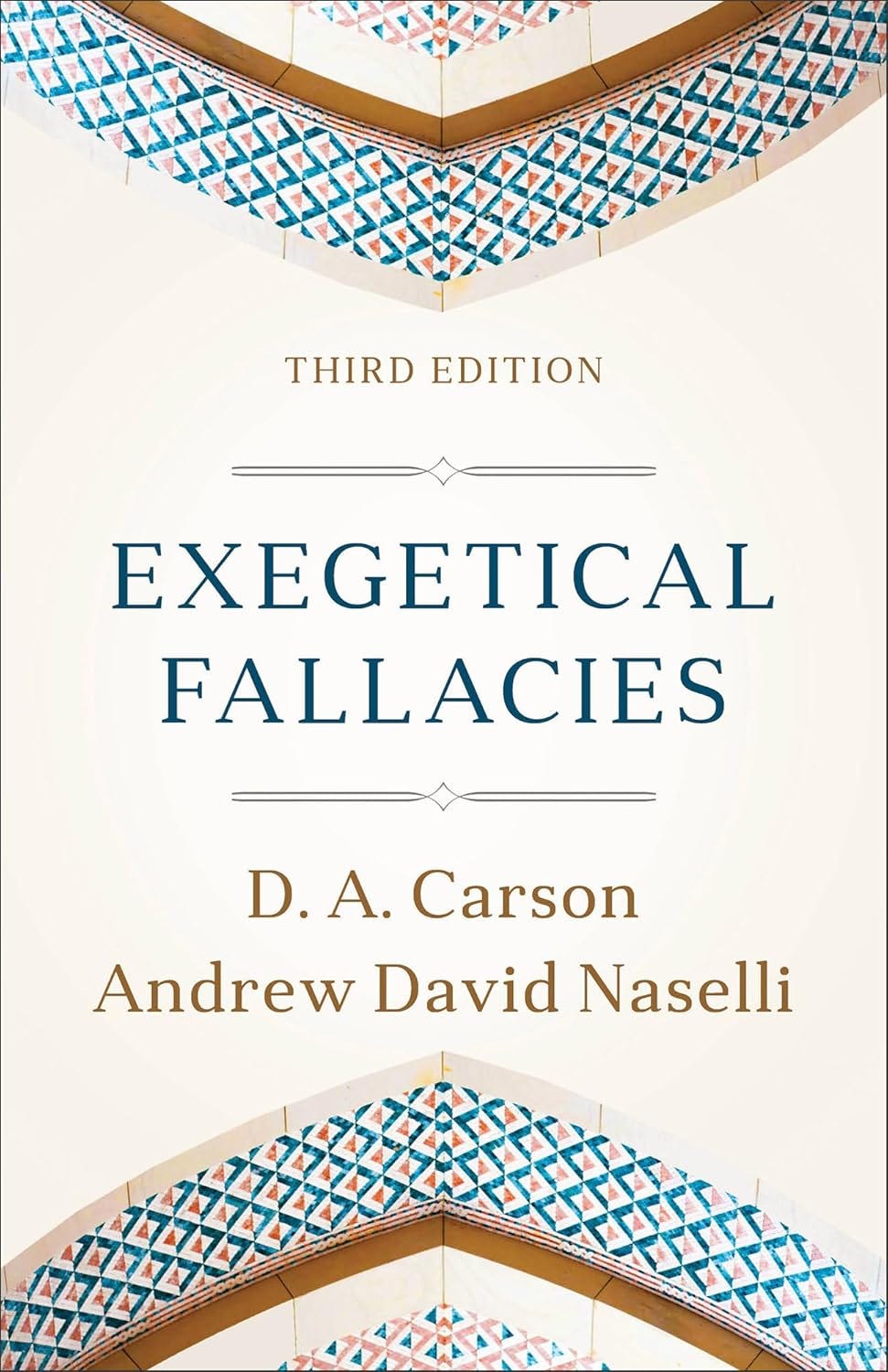
This book is about the common mistakes that pastors and scholars make when interpreting the Bible. I first read it as a seminary student, and it scared me—in a good way. It insisted that studying and preaching Scripture is serious business. I highlighted the following statement in my copy of the first edition (published in 1984): “We are dealing with God’s thoughts: we are obligated to take the greatest pains to understand them truly and to explain them clearly.” I’ve tried to do that in almost four decades of pastoral ministry. So, this is an important book for pastors or anyone who is serious about studying and teaching the Bible. Note that while D. A. Carson is the original author, the third edition has been updated by his former student and research assistant, Andy Naselli.
Grandkids Corner
Recently, our grandson Jameson (4) felt bad that he was not old enough to attend basketball camp at Libertyville High School along with his older siblings and his cousins. He kept asking to go to a basketball camp. So, his cousin Kolby (13)—also our grandson—created a camp for Jamo. Kolby worked with Jamo on shooting and set up cones for dribbling drills. Here are a couple photos from Kolby’s basketball camp.

Jamo had a smile on this face the whole time and did all the drills. He even got a popsicle because he won a competition. However, Kolby made Jamo run five “up and backs” at one point for not listening!
Thanks as always for reading my weekly letter. Have a good weekend! And for those of you in the USA, happy 4th of July!
So appreciate the weekly letter, Steve. Great grandsons story! Didn’t Don Carson publish an earlier book on that topic? Soinds good.
That was really good! Thank you