
Steve's Weekly Letter
Thursday, August 13, 2026

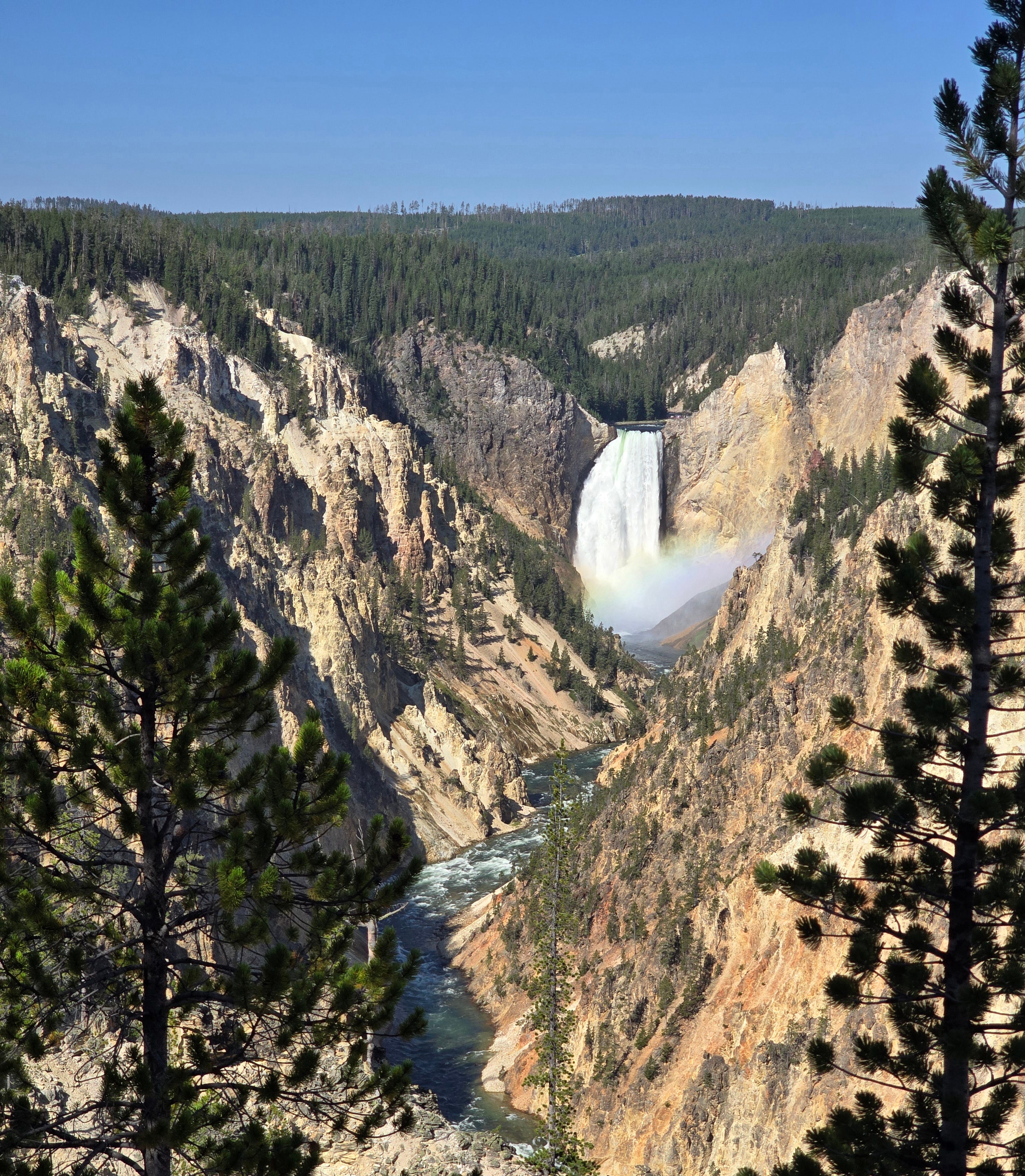
This was the early morning view of Lower Falls in the Grand Canyon of the Yellowstone a couple weeks ago from Artist Point in Yellowstone National Park.
Reflection
Is it alright to ask God for something and then add a qualifier like “if it is your will” or “but if you say ‘no,’ we will still trust you”?
Over the years, I’ve heard a few Christians says that hedging your prayer with a statement like this is an expression of doubt. It betrays a lack of faith. After all, James 1:6-8 says: When you ask, you must believe and not doubt, because the one who doubts is like a wave of the sea, blown and tossed by the wind. That person should not expect to receive anything from the Lord. Such a person is double-minded and unstable in all they do.
However, three men who were thrown into a blazing furnace—and survived—would beg to differ!
But if Not
In Daniel 3, we learn that three young men from the royal family in Judah refused to fall down and worship the image of gold set up by Babylonian King Nebuchadnezzar. This made him furious, so he summoned the three and gave them this ultimatum: “If you are ready to fall down and worship the image I made, very good. But if you do not worship it, you will be thrown immediately into a blazing furnace. Then what god will be able to rescue you from my hand?” (Daniel 3:15).
The three replied: “If we are thrown into the blazing furnace, the God we serve is able to deliver us from it, and he will deliver us from Your majesty’s hand. But even if he does not, we want you to know, Your Majesty, that we will not serve your gods or worship the image of gold you have set up” (Daniel 3:17-18).
The words translated “but even if he does not” are even more terse in Aramaic: “But if not.” In fact, the ESV translates it this way. “But if not.”
These are words of faith, not doubt.
Humility vs. Presumption
We are quick to assume that expressions like “if it is your will” or “but if not” reflect doubt rather than faith. At best, they seem to lack confidence. At worst, they betray that we really do not expect God to do what we have asked him to do.
Yet genuine faith accepts that God may not do exactly what we ask him to do. Faith has no doubts about God’s power. But it understands that God’s ways are not our ways and that his plans and purposes are beyond our comprehension.
This is not wavering or doubt. Rather it is an expression of humility.
It resembles Jesus’ prayer in the Garden of Gethsemane when his soul was overwhelmed with sorrow to the point of death at the prospect of his crucifixion (see Matthew 26:38). He prayed: “My Father, if it is possible, may this cup be taken from me. Yet not as I will, but as you will.
Doubt vs. Double-mindedness
Of course, I do not deny that believers (including myself!) will struggle with doubt. When we have moments of emotional doubt about God’s power, we will do well to follow the example of the father who brought his demon-possessed son to Jesus. He said, “If you can do anything, take pity on us and help us” (Mark 9:22).
“‘If you can’?” said Jesus. “Everything is possible for one who believes” (Mark 9:23).
Immediately, the boy’s father exclaimed, “I do believe; help me overcome my unbelief!” (Mark 9:24).
I resemble that remark! “I do believe; help my unbelief” (my literal translation). Both can be true simultaneously. We can believe; yet we struggle with unbelief.
However, we must not conclude from James 1:6-8 (cited at the beginning of this discussion) that emotional doubt causes our prayers to go unanswered. This is not the concern James is addressing. It’s clear from James 1:8 that the doubt is related to double-mindedness—that is, divided loyalty. Thus, James is referring to someone whose attention is divided between God and things.
Trusting God no matter what the outcome
In the final analysis, faith is not trusting in God for a particular outcome. It is trusting God no matter what the outcome.
It takes as much (or more!) faith to accept that God might not heal a loved one from cancer than to pray with complete “certainty” that God will work a miracle in a loved one’s cancer-ridden body.
True faith is not presumptuous. It asks God, but does not demand from him. Nor does it act as if one’s level of resolve is the key to getting God to respond.
The three young men in Daniel 3 trusted God for deliverance yet added “But if not.” Jesus prayed for deliverance yet added “Yet not as I will, but as you will.”
The three young men were delivered in a miraculous way. But Jesus went to the cross.
The genuineness of our faith is not expressed in certainty about a particular outcome. Rather, it is expressed in our trust of God—no matter what he deems best.
Personal Update
This Sunday, August 16, I will begin a four-week sermon series at the Evangelical Free Church of Des Plaines (where I serve as interim pastor) on Psalms Less Traveled. I plan to preach four psalms that have struck me as I’ve read them in the past few months in my personal reading of Scripture. I will begin this Sunday by preaching Psalm 36. The title of the sermon is “Your Best Life Now and Forever.”
The book I’m reading this week is A Forgotten Prophet by Christopher Ash. You can check it out here. I’ve been reading it in preparation for a fall sermon series on 2 Chronicles, and I highly recommend it. It’s only 100 pages (actually 91 because the first chapter starts on page 9), so it won’t take forever to finish it.
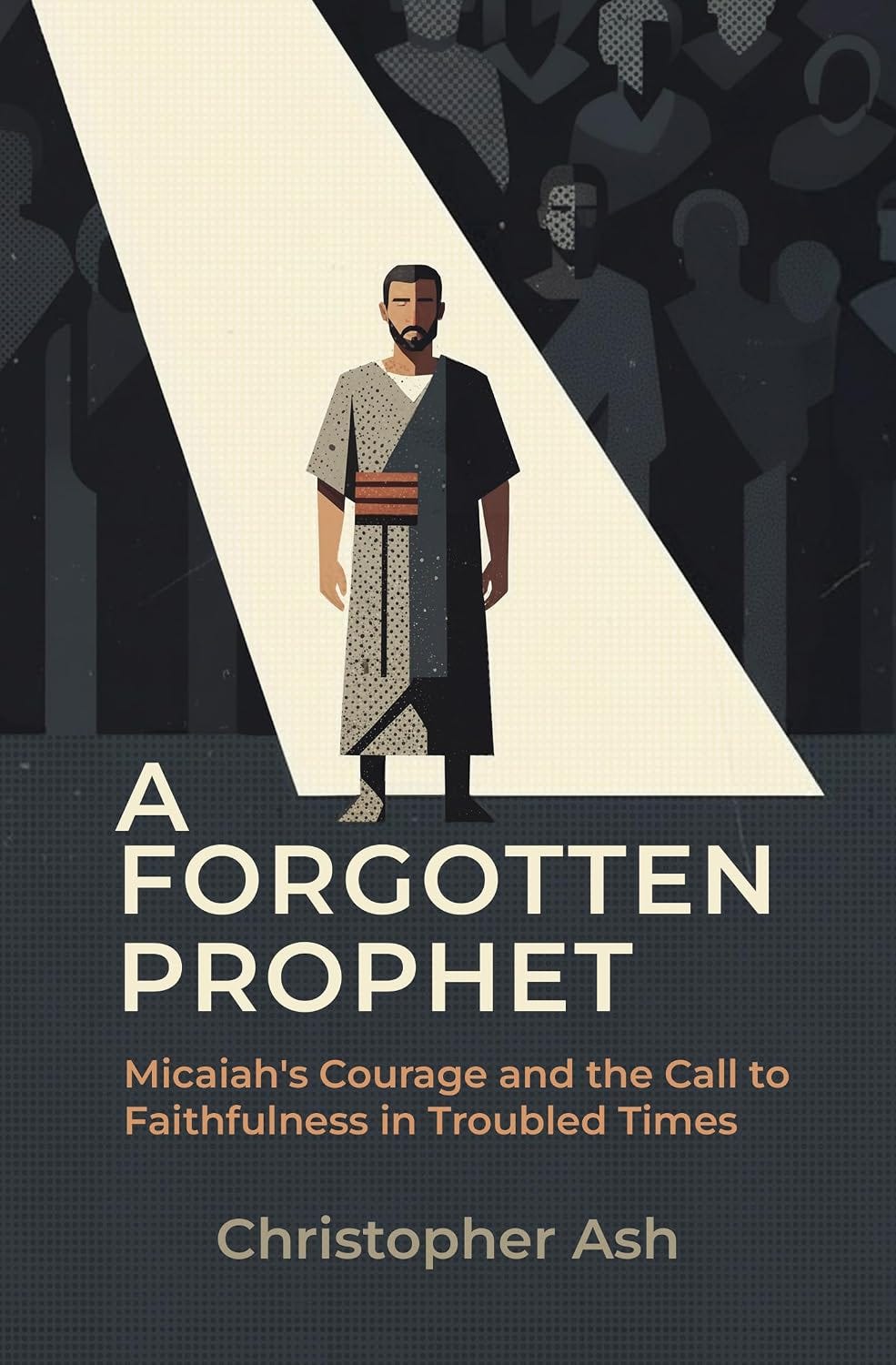
This book tells the story of a little-known Old Testament prophet—Micaiah. As the subtitle says, it’s about “Micaiah’s courage and the call to faithfulness in troubled times.” If you’re discouraged about the state of the church these days, you’ll find this book helpful and encouraging. It would be ideal to read as you study 2 Chronicles 18.
Grandkids Corner
Fly fishers learn early on that the instrument they use is a rod, not a pole. Norman Maclean acknowledges this in A River Runs Through It. He talks about his father, the Rev. Maclean, who taught Norman and his brother, Paul, how to use a fly rod. Norman writes: “Always it was to be called a rod. If someone called it a pole, my father looked at him as a sergeant in the United States Marines would look at a recruit who had just called a rifle a gun.”
Last week, my grandson, Jacob (5), was walking one afternoon with his dad to fish the Boulder River. We were all at Clydehurst Christian Ranch in Montana. Jacob was carrying his spinning rod on his way to the river. As you can see from the photo below, he did pretty well (and he caught the trout all by himself).
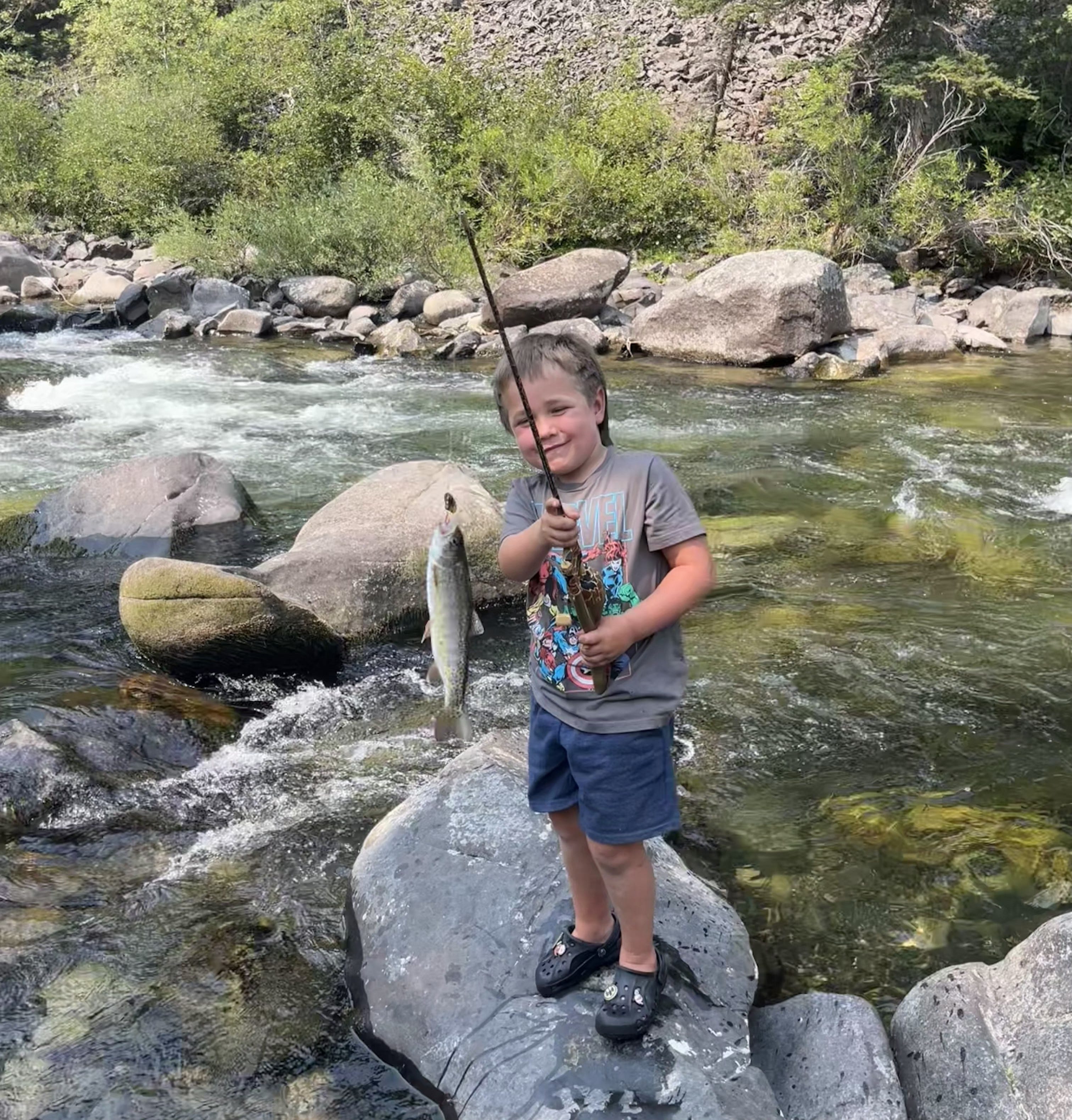
As Jacob walked by another camper on the way to the river, the guy said, “Hey, that’s a really nice pole you have.” Without breaking stride, Jacob replied in a matter-of-fact voice: “Thanks. It’s a rod.” The camper, a family friend, laughed about it and later said, “Well, he sure put me in my place!” I think Jacob is ready for a fly rod.
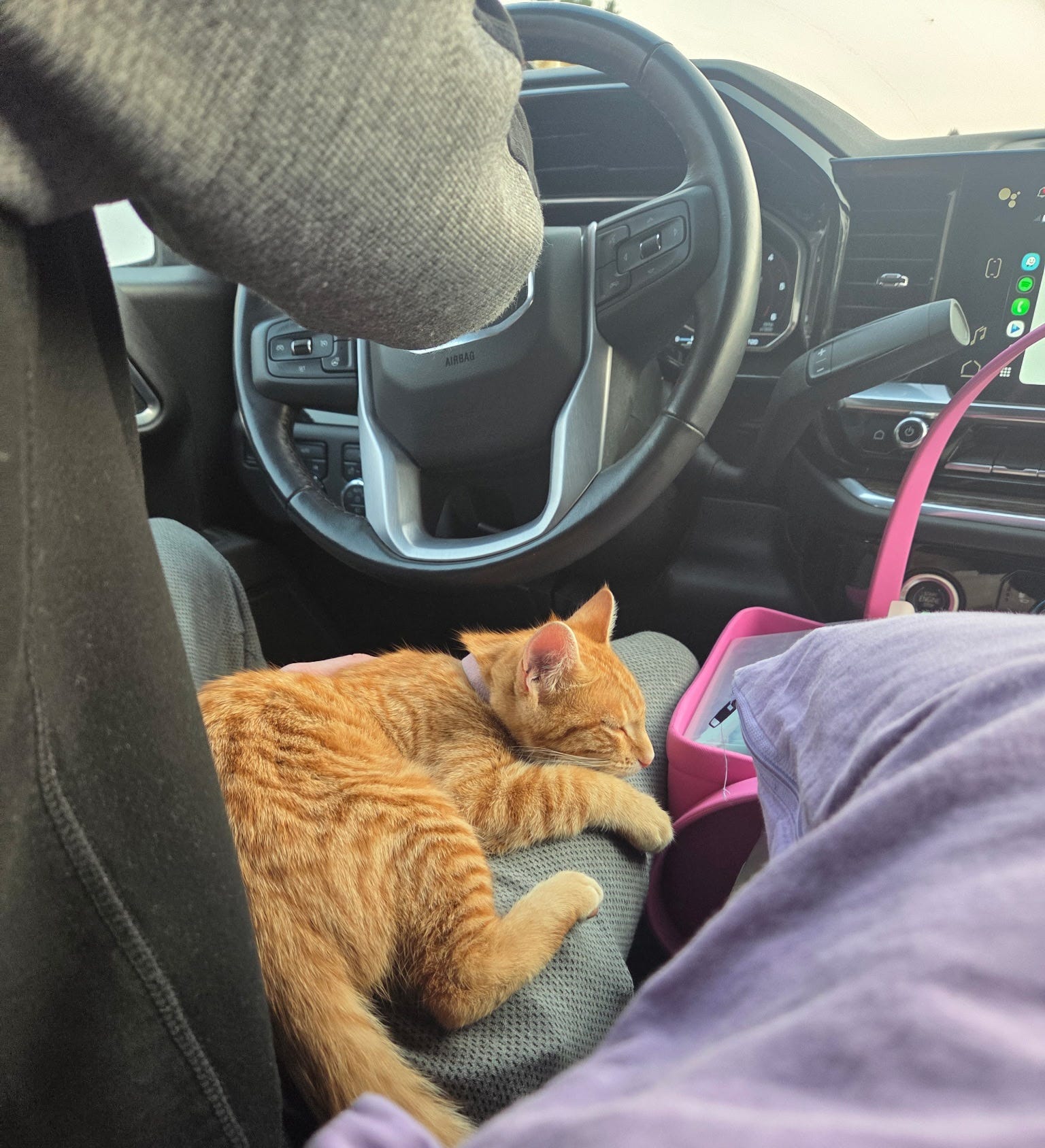
Meanwhile, our granddaughter Taryn (9) and her parents decided to adopt one of the kittens that were spending the summer at Clydehurst. The family already has a couple cats, so what is one more? Here is Taryn with “Peaches”, the family’s new kitten.
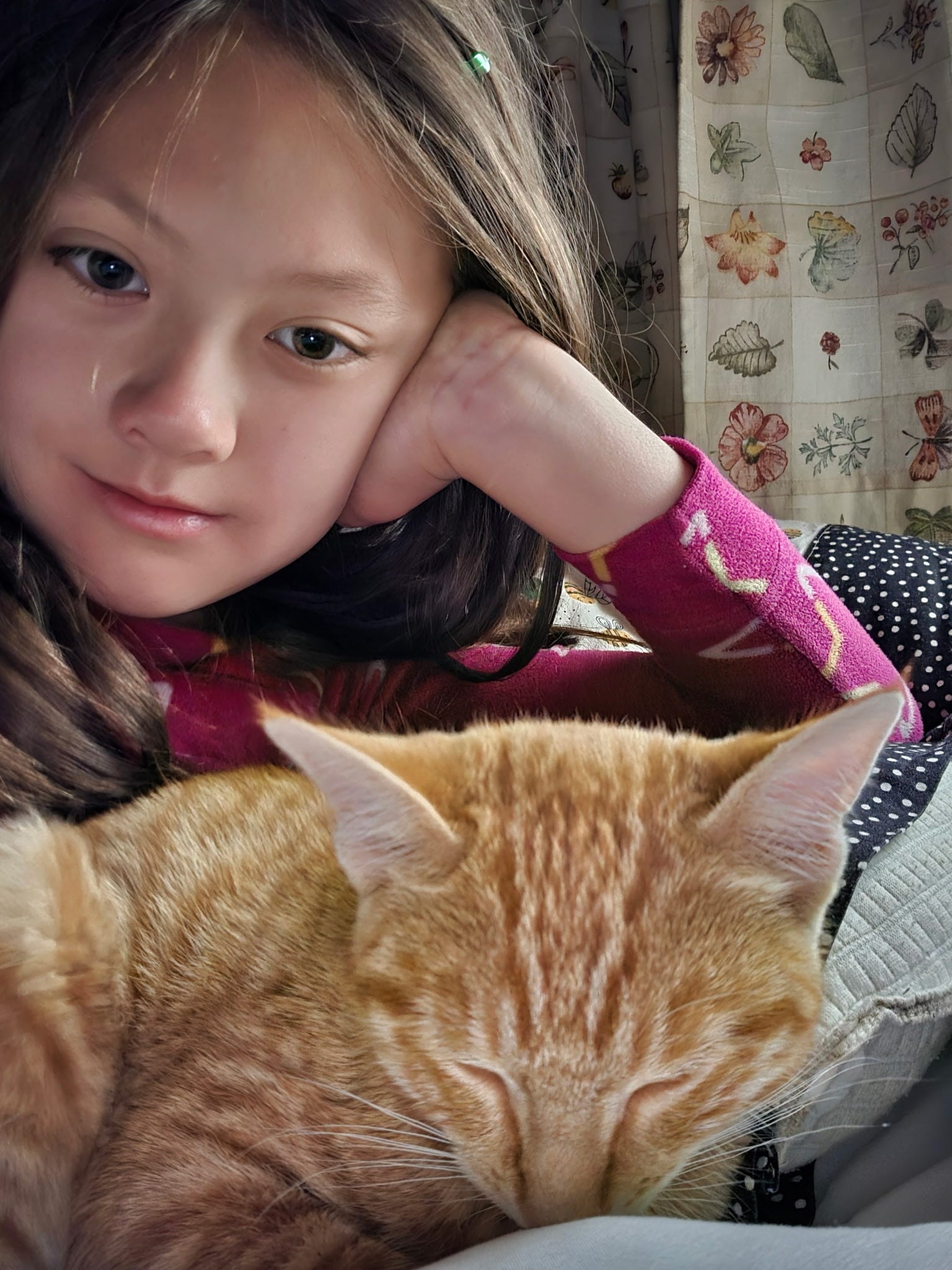
By all accounts, Peaches did well on the ride home. When she was out of her carrier, she either leaned against Taryn’s dad, Ben (our son), or sat on his lap as he drove. Taryn’s family chose the name Peaches as a nod to Princess Peach in Nintendo’s Mario franchise. It appears that her new family will indeed treat her as a princess.
Thanks as always for reading my weekly letter. Have a good weekend!
The Ash book looks great, didn't know about it. Preaching II Chronicles is a blast. Here are my 7 reasons people should preach it, but I guess since you are already planning to do it, you've already got enough reasons! Think of this as the cherry on top, haha:
https://www.casketempty.com/blogfeed/7reasonswhyimpreachingchronicles