
Steve's Weekly Letter
Thursday, June 25, 2026


Priscilla and I attended this Beach Boys concert last year in Milwaukee with a friend of ours from Portland, OR. His son-in-law is the drummer! Jon, the drummer, is a committed follower of Jesus, and he was recruited by John Stamos. There are still two group members left from the mid-1960s—Mike Love (front and center) and Bruce Johnston (front left).
Reflection
Don’t treat preachers like rock stars.
That is the first of three strategies that can help you listen well to a sermon. Believe it or not, it comes right out of the Bible (more on that in a moment).
Listening to a sermon is hard work. Like playing the drums, it is easy to do poorly. I have been preaching sermons for almost forty years, and I have been listening to them for as long as I can remember. Honestly, I think listening is as hard as preaching.
Since preaching is one of God’s key strategies for communicating his truth to people (see Romans 10:14 and 2 Timothy 4:2), we need to excel at listening. So, what is a listener to do? Here are three strategies for listening effectively to sermons.
1. Don’t treat preachers like rock stars
This one comes from what the LORD said to the prophet Ezekiel. He begins by telling the prophet this: “As for you, son of man, your people are talking together about you by the walls and at the doors of the houses, saying to each other, ‘Come and hear the message that has come from the LORD’” (Ezek. 33:30-31a).
That sounds terrific! What preacher wouldn’t want to hear that news?!
But God is not done. He continues: “My people come to you, as they usually do, and sit before you to hear your words, but they do not put them into practice. Their mouths speak of love, but their hearts are greedy for unjust gain. Indeed, to them you are nothing more than one who sings love songs with a beautiful voice and plays an instrument well, for they hear your words but do not put them into practice” (Ezek. 33:31b-32).
Did you catch that? The people are treating Ezekiel like a singer of love songs who has a great voice and plays an instrument well. In other words, they are treating him like a modern-day rock star.
When we attended the Beach Boys concert last spring, we had fun, fun, fun (if you know, you know). It was enjoyable, but not life changing. None of the messages in the songs prompted me to think or act in a different way. And that’s how it was for people listening to Ezekiel. They loved to listen to him, but didn’t act on what he said.
There are serious consequences for not putting God’s words into practice—as Jesus pointed out in Matthew 7:24-27. So when we treat preachers like Elvis Presley or Taylor Swift or Ed Sheeran, we do so to our peril.
2. Treat the words of preachers like the words of God
Preachers are not infallible. Nor do not have authority in and of themselves. But if they preach God’s Word, they speak with authority.
In 1 Thessalonians 2:13, the Apostle Paul wrote: And we also thank God continually because, when you received the word of God, which you heard from us, you accepted it not as a human word, but as it actually is, the word of God, which is indeed at work in you who believe.
We cannot excuse ourselves from listening because a preacher is boring, too emotional, or has annoying mannerisms. We must listen to any preacher who preaches the Word of God.
I have practiced this when I have listened to pastoral interns (that is, pastors-in-training) preach. Some were quite good. Some were not. Yet all of them re-revealed the living God as they communicated his Word.
But how do we know if preachers are preaching God’s Word or their ideas? This leads to a third practice.
3. Search the Scriptures for yourself
The writer of Acts describes the response of those in the Jewish synagogue at Berea when Paul and Silas arrived there on one of Paul’s “missionary journeys.” Acts 17:11 says: Now the Berean Jews were of more noble character than those in Thessalonica, for they received the message with great eagerness and examined the Scriptures every day to see if what Paul said was true.
That’s high praise considering what we just read in 1 Thessalonians 2:13 about the listeners in Thessalonica!
While we should not adopt a posture of suspicion or radical skepticism, we should study the Scriptures on our own and in community to confirm what preachers claim as they preach God’s Word.
If you have a question about something a preacher says, write a note to yourself to check it out later.
Preaching has the right effect when it encourages you to read and study the Word for yourself rather than simply relying on preachers and believing everything they say.
A Few More Tips
Here are a few more tips that come out of my experience as a listener.
Take notes. Even if you throw them away once you get home, note-taking can cause you to be an active listener.
Pray for the preacher and for yourself. Pray when the preacher gets up to preach and during the sermon. Ask God’s Spirit to help the preacher proclaim God’s Word with clarity, accuracy, and power. Pray for yourself, too. Ask God to help you listen and obey.
Minimize distractions. A lot of people use the Bible app on their smartphones rather than bringing an actual Bible to church. I’ve done that too. But it requires discipline not to check Facebook or ESPN or Twitter (X). By the way, even a physical Bible can have distractions. The great preacher Harry Ironside used to study the maps in back of his Bible if the preacher to whom he listened was boring. Maybe that’s better, though, than scrolling through Facebook.
Listen for the big idea of the sermon. Good preachers will make this clear, even if they do it subtly. But even if they don’t, try to summarize in a sentence the main point of the Bible passage being preached. Attempting to put it in your own words forces you to think about the biblical text and what it means.
Consider how to obey the Bible passage you heard preached. Good preachers will talk about how to live out the message of the text as a church and as individuals in it. But even if they don’t, what action is God’s Spirit prompting you to take? What are you going to do about it?
Listening to sermons is hard work. But it’s worth the effort since God uses his Word to transform the lives of believers who put into practice what they have heard. So listen carefully—whether or not your preacher preaches like a rock star sings.
Personal Update
This Sunday, June 28, I plan to preach Ephesians 5:1-14 at the Evangelical Free Church of Des Plaines, where I serve as interim pastor. The title of the sermon is “The Right Way to Live.”
The book I have been reading this week is Unfolding Redemption: The Heart of the Gospel in the Story of Old Testament History by Ian J. Vaillancourt. You can view it here. I am always on the lookout for books that help people in our churches understand the Old Testament and how it fits into the larger story of Scripture. This one is a gem!
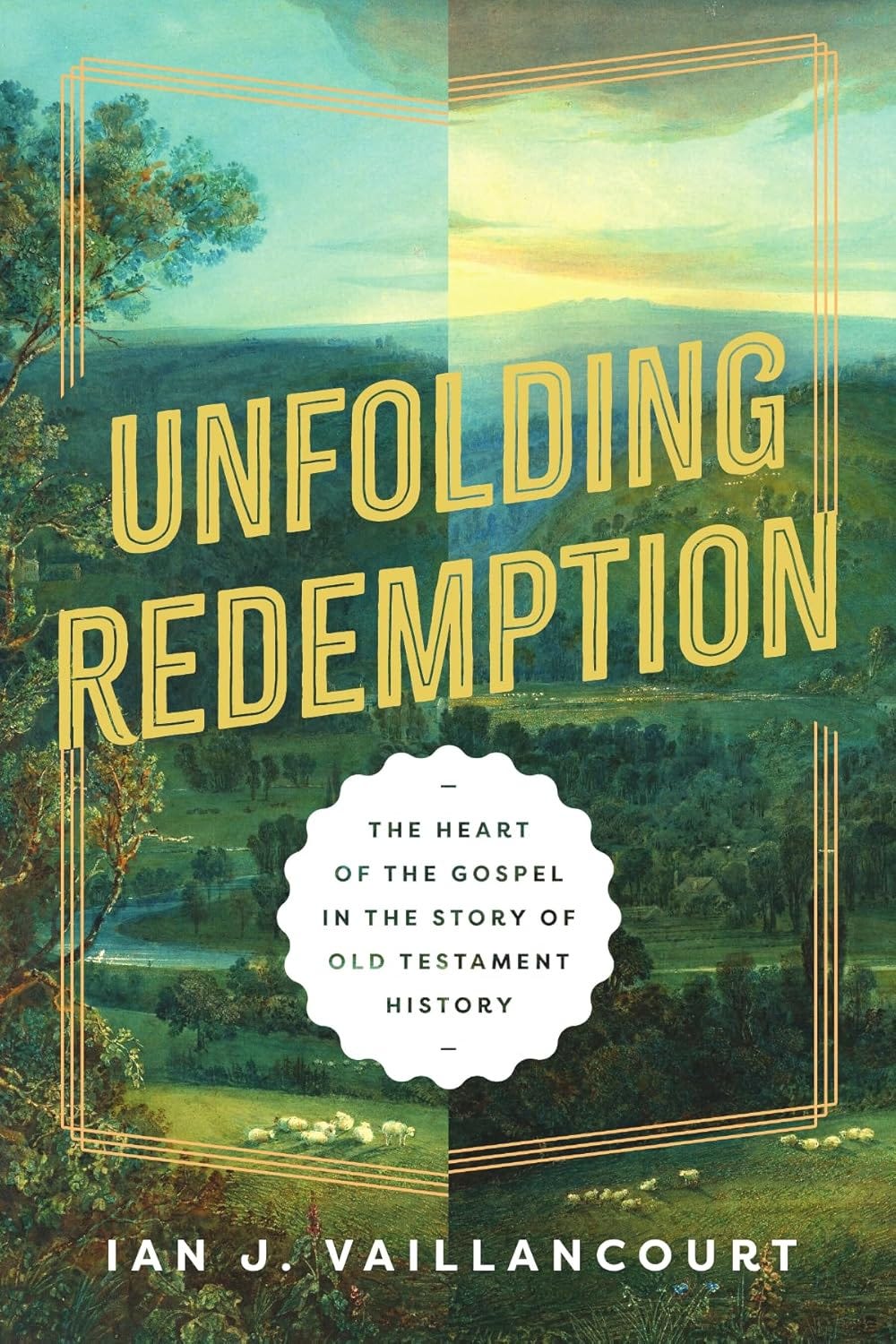
This book is quite readable and focuses on the historical books in the Old Testament. Like a good sermon, it has interesting illustrations. You could also use it for a Bible study or small group since it has discussion questions at the end of each chapter. Readers without little or no background in the Old Testament will find it helpful. So will those who know the Old Testament well but need a refresher course on how it all fits together and anticipates the gospel of Jesus Christ. It is only 169 pages long, and the type is fairly large. If I had the money, I’d offer $100 to everyone who reads it. It’s that worthwhile!
Grandkids Corner
Lately, our older grandkids—Blake (15) and Kolby (13)—have been caught in the middle of a labor dispute. Thankfully, it has not turned ugly because the dispute is between their parents and us! The dispute is over how much we pay our grandkids to mow our lawn, spread mulch around our shrubs, and weed our flower beds.

To our credit, Priscilla and I pay a generous, yet fair hourly wage. However, we have run into trouble when we’ve added a gift (perhaps a tip) to this payment. We claim that we are avoiding overpayment by taking this approach. But the parents are not buying it. We’re trying to argue “grandparents’ prerogative” as our defense. It sounds impressive, doesn’t it. But I don’t know if it will hold up in parental court.
Thanks as always for reading my weekly letter. Have a good weekend!