
Steve's Weekly Letter
Thursday, June 4, 2026


We enjoyed this Montana sunset a few years ago a from my son-in-law’s parents’ front yard.
Reflection
God has strong words for abusive spiritual leaders.
If you are a pastor or elder or a spiritual leader of any kind, his words are sobering. If you are a victim of an abusive leader, God’s words are encouraging and hopeful.
God’s strong words for abusive spiritual leaders occur in Ezekiel 34. This is one of the messages Ezekiel gave to the exiles in Babylon after receiving word that the city of Jerusalem had fallen (Ezek. 33:21-22).
What Abusive Spiritual Leaders Do
Ezekiel 34:1-2 says: The word of the LORD came to me: “Son of man, prophesy against the shepherds of Israel; prophesy and say to them: ‘This is what the Sovereign LORD says: Woe to you shepherds of Israel who only take care of yourselves! Should not shepherds take care of the flock?
The “shepherds of Israel” were the nation’s kings and their officials. Along with the priests and prophets, the kings were to be spiritual leaders as well as political leaders—kings who revere the LORD and follow his words (see Deuteronomy 17:18-20).
However, most of the kings of Judah had failed miserably. So did the priests and prophets (see Ezek. 22:25-29). They seized property, killed people for unjust gain, and practiced extortion. Furthermore, they did not act when the people of the land oppressed the poor and needy and mistreated the foreigner.
The bottom line is that they abused the people they were supposed to lead, treating them like a roaring lion tearing its prey and like wolves tearing their prey (Ezek. 22:25, 27).
The LORD makes this clear in a stunning play on words in Ezekiel 34:2. Although our English translations smooth out the wording, the literal translation is: Woe to you shepherds of Israel who only shepherd themselves. Should not the shepherds shepherd the flock?
The leaders of Israel were bad shepherds who preyed upon (not prayed for!) the flock—that is, God’s people.
This still happens today. There are pastors (the Latin word for “shepherds”) who use their position to benefit themselves instead of caring for the people Jesus has placed under their care.
One of my professors once said: “God puts leaders in place to protect those who are not leaders.”
How tragic it is when pastors use their power and influence to embezzle or mishandle money, to manipulate people to get what they want, or to commit sexual abuse. These kinds of leaders refuse accountability, bully others, and forget that the church belongs to God.
What God Does about Spiritual Abuse
Thankfully, God does not turn a blind eye to spiritual abuse. According to Ezekiel 34, he does something to the abusive leaders and something for their victims.
In Ezekiel 34:10, the Sovereign LORD tells us what he will do to the abusers: “I am against the shepherd and will hold them accountable for my flock. I will remove them from tending the flock so that the shepherds can no longer feed [literally, “shepherd”] themselves.”
I realize that spiritual abuse can go on for years. Yet God will eventually bring down pastors and other leaders who mistreat or abuse the people they are supposed to protect. He often uses godly pastors or vigilant members of a church to expose such evil-doing.
The Sovereign LORD also spells out what he will do for the victims of spiritual abuse:
He will rescue them from their abusers (34:10)
He will search for them and look after them (11)
He will look after them (12)
He will rescue them from scattered places and restore them (12-13)
He will make them flourish (14-15)
God does this today too. The damage done by abusive leaders is real. It cuts deeply and leaves lasting scars. Yet God still cares for his people (1 Peter 5:7). He often uses compassionate pastors and church members to come alongside victims of abuse to protect them and show them with the kind of love they need for healing. But has done even more.
God’s Ultimate Solution
In Ezekiel 34:23-24, God makes a magnificent promise: I will place over them one shepherd, my servant David, and he will tend them; he will tend them and be their shepherd. I the LORD will be their God, and my servant David will be prince among them. I the LORD have spoken.
But wait. King David was almost 500 years in the rear view mirror when God delivered this prophecy through Ezekiel. So who is this “one shepherd” who is identified as “my servant David”? The answer is Jesus!
In John 10, Jesus boldly proclaimed: “I am the good shepherd.” He said this twice (verses 11 and 14). And remarkably, he said it right before Hanukkah—that is, the Festival of Dedication (John 10:22). One of the customs during Hanukkah in Jesus’ day was the reading of Ezekiel 34 to remind the Jewish people about the pain that failed leaders had caused them.
But Jesus never fails! Rather than devouring the sheep, he lays down his life for them (John 10:17). He heals, provides rest, comforts, and binds-up the wounded and weary.
In the church today, let’s pray for and insist on godly shepherds (pastors) who follow the lead of the Good Shepherd (Jesus) and care for the welfare of the sheep.
Remember, God puts people in leadership to protect those who are not in leadership.
Personal Update
Today I am in Tulsa, Oklahoma teaching a class for Western Seminary (in Portland, Oregon) on the theology and practice of pastoral leadership. This class meets all day both today and tomorrow, as well as for two more days in July. Then, this particular cohort will be finished with their three-year master’s degree program. In the fall, I’ll begin teaching the final year of a second master’s degree cohort in Tulsa.
This Sunday, June 7, I plan to preach Ephesians 3:14-21 at the Evangelical Free Church of Des Plaines, where I serve as interim pastor. The title of the sermon is “More Prayer Requests for Yourself and for Other Believers.”
The book I have been dipping into this week is Unearthing the Bible: 101 Archaeological Discoveries that Bring the Bible to Life by Titus Kennedy. My son, Ben, recommended it to me. You can check it out here.
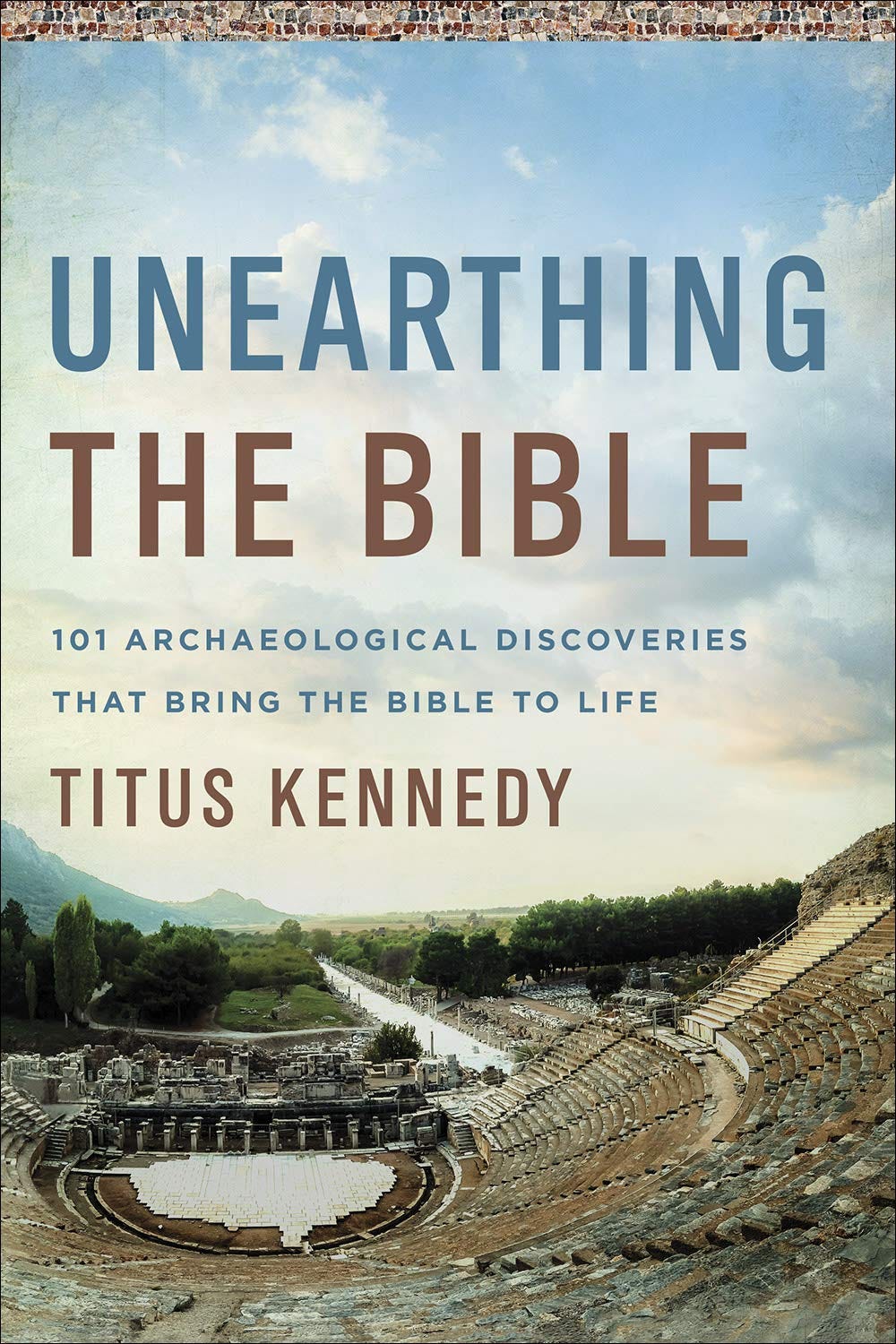
If you want a brief (2-page) description of the most important archaeological discoveries that help us understand the Bible and that confirm its reliability, this book is for you. It’s written in plain language by a reputable archaeologist (who now teaches in the Bible Exposition department at Dallas Theological Seminary). It’s a great resource for both those who know a lot and those who know little about archaeological discoveries in Bible lands.
If you’re new to this topic, here are the top ten discoveries I think everyone should know. There is a two-page chapter on each discovery.
Chapter 28 - The Merneptah Stele (mentions Israel in Canaan)
Chapter 38 - Tel Dan Stele (mentions the “house of David”)
Chapter 50 - Black Obelisk of Shalmaneser III (mentions King Jehu)
Chapter 56 - Siloam Inscription (found in Hezekiah’s tunnel)
Chapter 57 - Lachish Reliefs (pictures Assyria’s attack on Lachish in Israel)
Chapter 58 - Sennacherib Prisms (describes Assyria’s attack on Hezekiah)
Chapter 62 - Lachish Ostraca (letters during Babylon’s attack on Judah)
Chapter 70 - The Cyrus Cylinder (Persian king’s decree to let exiles go home)
Chapter 74 - Great Isaiah Scroll (part of the Dead Sea Scrolls)
Chapter 101 - John Rylands Papyrus 52 (earliest fragment of the New Testament)
Grandkids Corner
If you’re a regular reader, you’re familiar with our grandson Jameson. We call him Jamo, and he is pictured below on his 4th birthday a few weeks ago. Recently, he had to learn a lesson about not taking things that don’t belong to him and about telling the truth about said things.

It all started when Jamo began coming home from church each Sunday with a handful of plastic coins in his pocket. Then, on one particular Sunday, he removed the coins from his pants’ pocket while on the ride home from church. His twin sister, Mila, saw them and complained that she didn’t get any. When asked about the coins, Jamo said that his teacher gave them to him. His parents thought it was odd that the teacher would give coins to Jamo but not to Mila. Jamo’s older sister, Gabriella, said that whenever she helps out in his class, the teacher never gives away coins to anyone.
So, Jamo’s parents asked him again where he got the coins. He replied, “From my teacher.” His mom then said, “Alright, I’m going to call your teacher and ask her about it.” At this point, Jamo yelled: “DON’T CALL!” This confirmed what everyone else in the car knew—that Jamo had taken the coins. Hopefully, he has learned what Moses said in Numbers 32:23: Be sure your sin will find you out. Now comes the return of the coins and an apology to his teacher!
Thanks as always for reading my weekly letter. Have a good weekend!