
Steve's Weekly Letter
Thursday, August 6, 2026

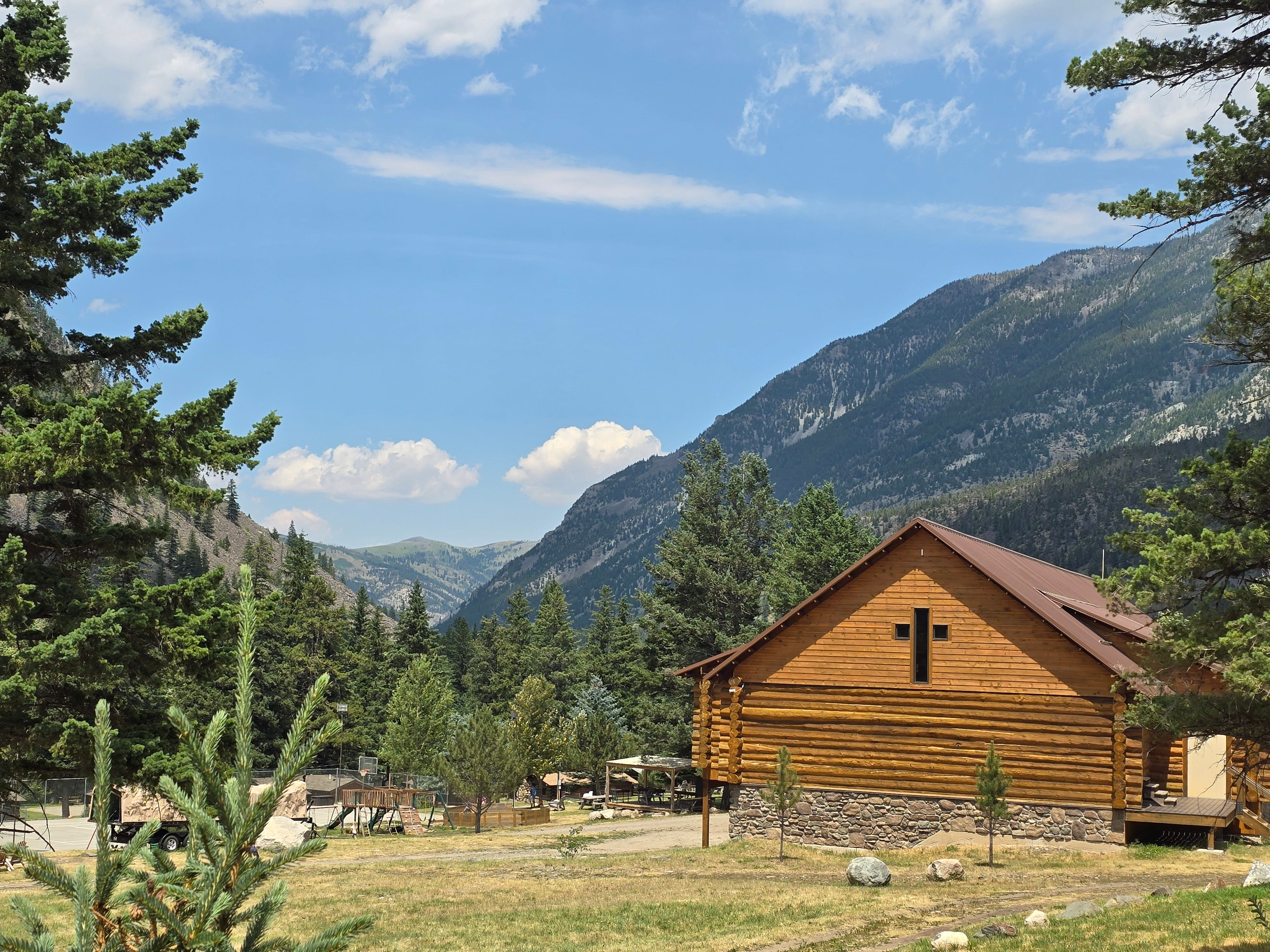
This is the view from our cabin—home for the week!—at Clydehurst Christian Ranch south of Big Timber, Montana.
Reflection
Today I’m going to tell you the story of the voice that saved a future king’s career.
It’s quite a contrast to the story I shared two weeks ago about the voice that ruined a king’s career. That story, from 1 Samuel 15, described how King Saul failed to listen to God’s voice because he listened to the voice of the people (verse 24).
That was the latest act of rebellion and turned out to be the proverbial straw that broke the camel’s back. Because King Saul rejected the word of the LORD, the LORD rejected him as king (1 Samuel 15:23).
By contrast, 1 Samuel 25 tells the story of the voice that saved a future king’s career.
A Surly Fool
The story opens by introducing us to a fool—a man who was surly and mean in his dealings (verse 3). His name was Nabal, which happens to be one of the Hebrew words for “fool.” We’re not sure if people called him this behind his back or if his parents gave him this name. Whatever the case, he earned it.
Of course, the main character in this section of 1 Samuel is David. He was a fugitive at this point in his life. For the past few year, he had been on the run from King Saul. David and his men stayed in remote wilderness or desert areas.
1 Samuel 25:4 reports: While David was in the wilderness, he heard that Nabal was shearing sheep. So he sent ten of his men to Nabal and greeted him in a respectful, deferential way. Then, they asked if he might be favorable to David and his men by providing them with whatever you can find for them (verse 8). David pointed out that he had treated Nabal’s shepherds right and even protected them (verse 7).
This was not an unusual or bold request. It was part of ancient near eastern hospitality among shepherds.
However, Nabal lived up to his name and said to David’s men: “Who is this David? Who is this son of Jesse? Many servants are breaking away from their master these days. Why should I take my bread and water, and the meat I have slaughtered for my shearers, and give it to men coming from who knows where?” (verses 10-11).
This is anything but a gracious response. It was arrogant, mean-spirited, and out of sync with the appropriate means of showing hospitality and gratitude.
So how is David going to respond.
An Angry Fugitive and Future King
To be blunt, David was pissed.
If you find that description offensive, please understand that I’m simply borrowing language from the biblical author. We’ll see that momentarily.
First, the biblical author reports David’s initial response. He said to his men, “Each of you strap on your sword” (verse 13). Uh-oh. David is read to fight!
Meanwhile, another character enters the stage—Abigail, the wife of Nabal. The biblical author described her earlier in the narrative as an intelligent and beautiful woman (verse 3).
When Abigail hears what her husband has done from one of his servants, she takes action to try to stop disaster from occurring. She acted quickly (verse 18) sending generous amount of food ahead with her servants and following them on a donkey to meet David (verse 20). She did this without informing her husband (verse 19).
Right before she encountered David, the narrator reports what David had just said: “It’s been useless-- all my watching over this fellow’s property in the wilderness so that nothing of his was missing. He has paid me back evil for good. May God deal with David, be it ever so severely, if by morning I leave alive one male of all who belong to him!” (verses 21-22).
David is angry and out to kill Nabal and his men. It is here that David makes a statement that almost all of our English versions sanitize. They translate David’s crude expression with the word “male.” Interestingly, the one Bible version that translates this literally is the King James Version. Verse 22 says: So and more also do God unto the enemies of David, if I leave of all that pertain to him by the morning light any that pisseth against the wall.
The expression “pisses against the wall” was a crude way to refer to a male. It surely expresses David’s anger and contempt for Nabal. He is ready to kill him!
The Saving Voice
When David met Abigail, she bowed before him and spoke first. I’d encourage you to read here entire speech in verses 24-31. It is a marvelous appeal to David to refrain from bloodshed, recognizing the harm this could create for David. It could derail his ascent to the throne. Here are a few highlights:
“Please pay no attention, my lord, to that wicked man Nabal. He is just like his name-- his name means Fool, and folly goes with him.” (verse 25)
“And now, my lord, as surely as the LORD your God lives and as you live, since the LORD has kept you from bloodshed and from avenging yourself with your own hands, may your enemies and all who are intent on harming my lord be like Nabal.” (verse 26)
“Please forgive your servant’s presumption. The LORD your God will certainly make a lasting dynasty for my lord, because you fight the LORD’s battles, and no wrongdoing will be found in you as long as you live.” (verse 28)
“Even though someone is pursuing you to take your life, the life of my lord will be bound securely in the bundle of the living by the LORD your God, but the lives of your enemies he will hurl away as from the pocket of a sling.” (verse 29)
“When the LORD has fulfilled for my lord every good thing he promised concerning him and has appointed him ruler over Israel, my lord will not have on his conscience the staggering burden of needless bloodshed or of having avenged himself. And when the LORD your God has brought my lord success, remember your servant.” (verses 30-31)
What a speech! We can learn a lot from how Abigail communicated. But how did David responsd? He said to her: “Praise be to the LORD, the God of Israel, who has sent you today to meet me. May you be blessed for your good judgment and for keeping me from bloodshed this day and from avenging myself with my own hands.” (verses 32-33)
Abigail’s voice, then, is the voice that saved a future king’s career. She talked him out of taking revenge—an act that would have diminished his reputation in the eyes of those he was anointed to rule. Besides, he would have dishonored the LORD.
Leaving Vengeance with God
In the end, the LORD dealt severely with Nabal. 1 Samuel 25:37-38 reports that Nabal’s heart failed him and became like a stone. About ten days later, the LORD struck Nabal and he died.
What I find especially interesting is that this narrative is sandwiched between two stories in which David refuses to take the life of King Saul when he has the opportunity—1 Samuel 24 and 26. In both instances, his men encouraged him to take Saul’s life and argued that the LORD had provided the opportunity (24:4; 26:8)!
Yet David recognized that he was not allowed to “Lay a hand on the LORD’s anointed” (26:9).
David had to learn to leave vengeance with the LORD not only when it came to King Saul, but also when offended by a fool like Nabal.
This is not an easy lesson to learn. We crave revenge. But Scripture is clear: Do not repay anyone evil for evil. . . . Do not take revenge, my dear friends, but leave room for God’s wrath, for it is written: “It is mine to avenge; I will repay,” says the Lord” (Romans 12:17, 19; the quote is from Deuteronomy 32:35).
God protected David from vengeance by sending Abigail. God protects you from vengeance by sending Jesus. According to 1 Peter 2, Jesus has provided us with an example of not retaliating (verses 21-23) and a means of escape (verses 24-25). We do not have to pay for our evil deeds because Jesus has accomplished justice by bearing our sins in his body on the cross.
We can be sure that God will make fools face pay day some day for their evil deeds. In the meantime, he calls us to leave vengeance with him so that we do not jeopardize our witness nor our mission.
Personal Update
As the above photo reveals, Priscilla and I are spending the week at Clydehurst Christian Ranch south of Big Timber, Montana. Our son, Luke, and I are speaking in chapel this week on the book of Revelation. Our daughter, Anna, and her family and our son, Ben, and his family are also here this week—as well as some close family friends from Illinois.
We will begin the drive home this Saturday, and I will not preach anywhere on Sunday.
The book I’ve been reading this week is The Longest Silence: A Life in Fishing by Thomas McGuane. You can check it out here.

It is an appropriate book for two reasons. First, Clydehurst is a few feet from the Boulder River, a wonderful place to fly fish. In fact, a few scenes from the movie, A River Runs Through It, were filmed just across the road. During filming, Robert Redford, Brad Pitt, Tom Skerritt, and the other actors stayed in the cabins here at Clydehurst.
Second, Tom McGuane lives just down the road near McLeod, Montana. He is an acclaimed author and a fine fly fisher. So it’s been fun to dabble in his work this week. And yes, the fishing here this week on the Boulder has been excellent!
Grandkids Corner
Our grandkids have enjoyed that kittens that are running around Clydehurst Christian Ranch this week. Actually, the word “enjoyed” is too tame. In some cases, “obsessed” would be more accurate. Perhaps the grandchild who is most obsessed with the kittens is Jacob (almost 5). He is holding one of them in the picture below.

The first night during an introductory chapel, in which all the families introduced themselves, Jacob panicked when he saw two of his cousins walk to the back of the chapel. His dad said Jacob was frantic, thinking that his cousins were going to visit the kittens without him. As it turns out, they were just headed to the restroom. As soon as chapel was over, he frantically raced (his dad’s description) for the exit. He wanted to be the first one to the little houses where the kittens lived.
Later that night, when his parents tucked him into bed, Jacob prayed, “God, help me to dream about cats.” I can honestly say that is a prayer I have never prayed.
Thanks as always for reading my weekly letter. Have a good weekend!
Galen and I are traveling from Wisconsin Dells home to Des Plaines. I just read your whole post to and we smiled and we enjoyed it really appreciated what you wrote. Glad you could have such a wonderful time with your family. We were able to be with two of ours up at Wisconsin Dells. Our youngest son out Portland comes every other year.
Have a wonderful time with your family!. I’m sure it’s beautiful there. You got me motivated and I checked out both of Erik Larson’s books to read on vacation. Hope I can find the time. 😉P.S. I loved your post!